Skip to content
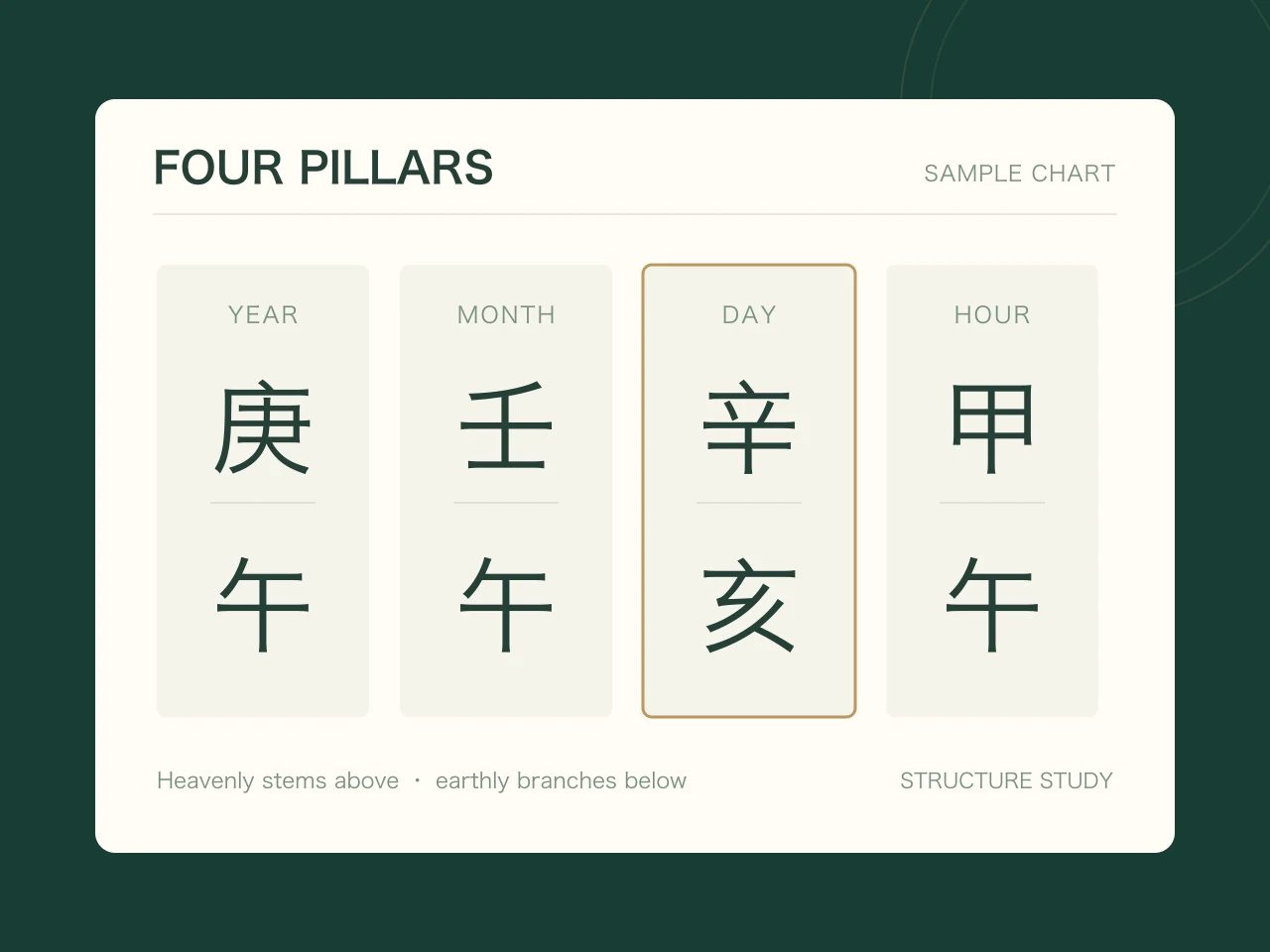
A sample Four Pillars chart with the year, month, day and hour stems above their branches.

BaZi

BaZi Work and Resource Reflection Tool

View a Four Pillars chart and element counts, compare broad cultural work associations with real evidence, and define a reversible 30-day test without aptitude, income, or timing scores.

Before you start

Prepare these details to see these results

Check which details are required before entering personal information. If something is missing, the page explains the effect instead of guessing for you.

What to prepare

  1. 1

    Birth date

    Establishes the calendar and timing data used by the calculation.

  2. 2

    Local birth time

    Adds the time pillar or time-dependent detail when the method supports it.

What you will see

  1. 1

    Birth profile

  2. 2

    Visible Four Pillars and element counts

  3. 3

    Declared cultural association examples

What you need before you start

Before starting, confirm that dates, times, and other details are accurate, and note which items are required or optional. Do not replace missing required information with a guess.

Birth date

required

date required

Establishes the calendar and timing data used by the calculation.

Example: 1990-06-15

What to enter: Use a valid calendar date that is not in the future.

If you leave it out: The tool cannot produce a reliable result without this required value.

Local birth time

required

time required

Adds the time pillar or time-dependent detail when the method supports it.

Example: 12:00

What to enter: Use a valid local time; leave it blank only when this item is optional.

If you leave it out: The tool cannot produce a reliable result without this required value.

How it works

This tool uses the details you enter on the page to produce a result. It is free to use, and your information is not sent to a third-party AI service.

What the tool actually calculates

The tool displays the Four Pillars, Day Master, and visible element counts for the eight stem-branch characters. It then uses one disclosed cultural mapping to show task examples associated with the largest visible count and the traditional 'wealth element' controlled by the Day Master.

These labels do not measure aptitude, personality, job fit, salary, credit, investment return, or future timing. The count also omits hidden-stem weighting, season, strength, and competing school methods.

Separate the result into auditable layers

Keep the calculation record, cultural association, and real-world evidence in separate fields.

  • Chart record: save the four pillars, Day Master, and five visible counts so another tool can reproduce them.
  • Cultural examples: treat task labels as prompts, not as jobs recommended for the user.
  • Counterevidence: record completed work that does not match the selected theme.
  • Real conditions: check qualifications, pay, contract terms, working conditions, health needs, and family responsibilities.
  • Resource boundary: use an actual budget, debt, cash flow, and professional advice rather than a traditional wealth label.

Run one low-risk 30-day test

Choose one reversible experiment: complete a small project, interview someone in a role, shadow a task, lead one meeting, or finish one course module. Define the question, time and cost limits, evidence, and review date before starting.

Review the work sample, feedback, effort, conditions, and counterevidence first. If the evidence does not support the theme, revise it; do not use an element explanation to dismiss the record.

Decisions this tool must not trigger

Do not resign, borrow, invest, buy insurance, reject a qualified opportunity, or change necessary medical or caregiving arrangements because of an element label. The tool does not identify an industry, role, business, or investment that will succeed.

Employment, contracts, tax, debt, insurance, business, and investment choices require verifiable information and qualified advice from the relevant domain.

What to preserve in the review record

Keep the input, tool version, chart result, original question, experiment, time and money cost, supporting evidence, counterevidence, and stop condition. Write the record before reading the interpretation so any outcome cannot be relabelled as a match afterward.

Test one theme at a time. Stop when the experiment affects safety, compliance, essential income or care, or exceeds the declared cost limit.

Turn a career theme into evidence

Choose one reported strength and define a small work experiment, such as leading one meeting, documenting a process, or testing a new skill for thirty days. Record the result, feedback, effort, and constraints. Keep labour-market evidence, qualifications, finances, health, and personal responsibilities ahead of any element label. The report cannot promise a promotion, salary, business result, or investment return.

Does this predict my income or investment luck?

No. The tool shows a Four Pillars chart and traditional labels from one stated method. It produces no income, aptitude, promotion, investment-return, or timing score and is not financial or employment advice.

What should I use the result for?

Use it to write a falsifiable question and one reversible 30-day test. Compare the theme with completed work, qualifications, conditions, feedback, cost, and contrary evidence before changing a job or financial commitment.

Can the report tell me which job will make the most money?

No. It can organize traditional work themes and reflection questions, but income depends on skills, market demand, location, opportunity, negotiation, and risk. Compare real job descriptions, training costs, pay data, and personal constraints before making a career decision.

How can I test one career theme without making a risky move?

Choose a reversible thirty-day experiment: interview someone in the role, complete a small project, take one course module, lead one meeting, or compare current job postings. Define the skill, time cost, evidence, and review date before starting. Record feedback and contrary evidence. Do not resign, borrow, invest, or reject a qualified opportunity because of an element label or timing statement. Career and income decisions require labour-market information, financial planning, health considerations, and the user’s real responsibilities.

Keep reading

Related articles

Try next

Related tools