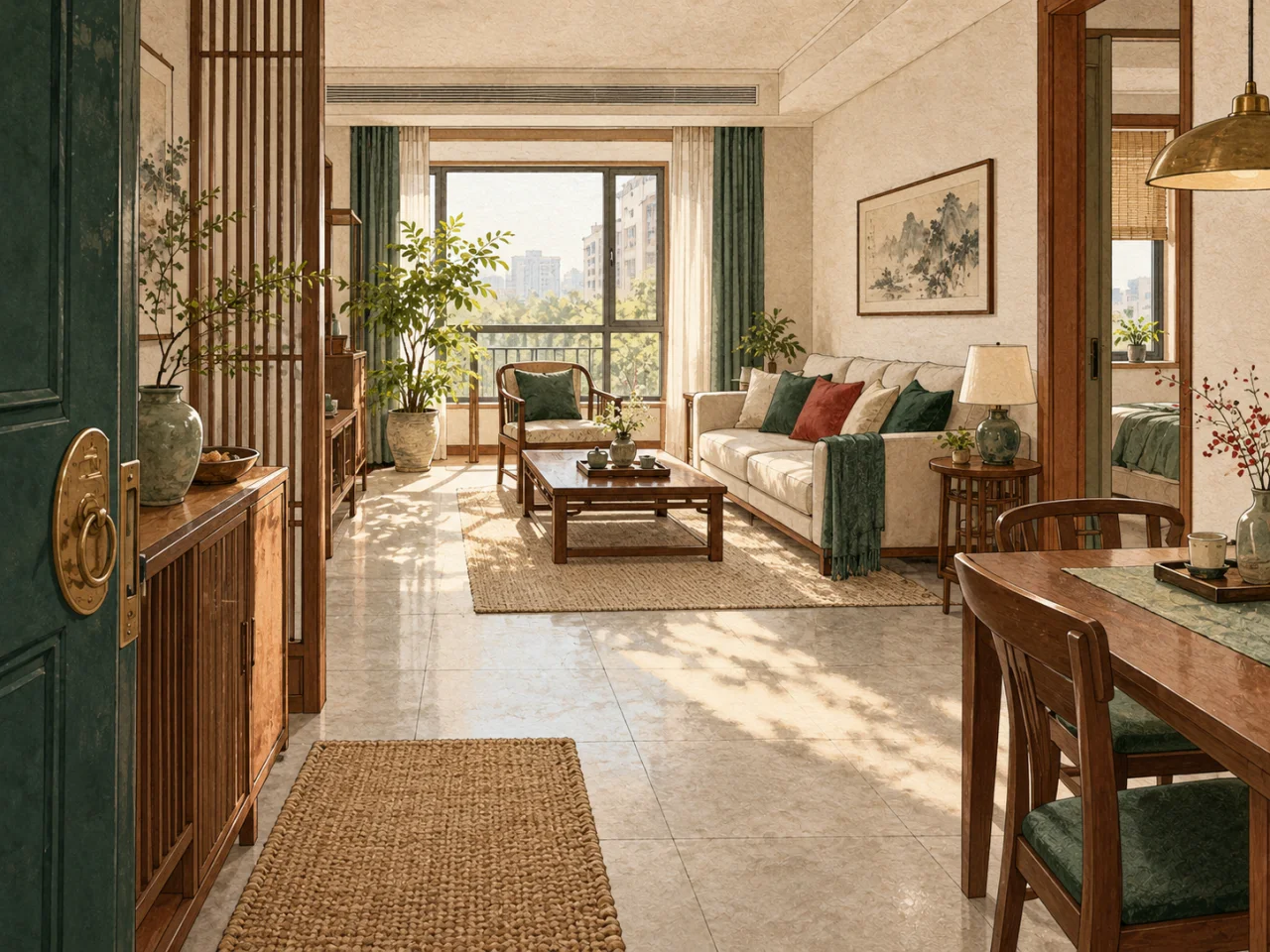
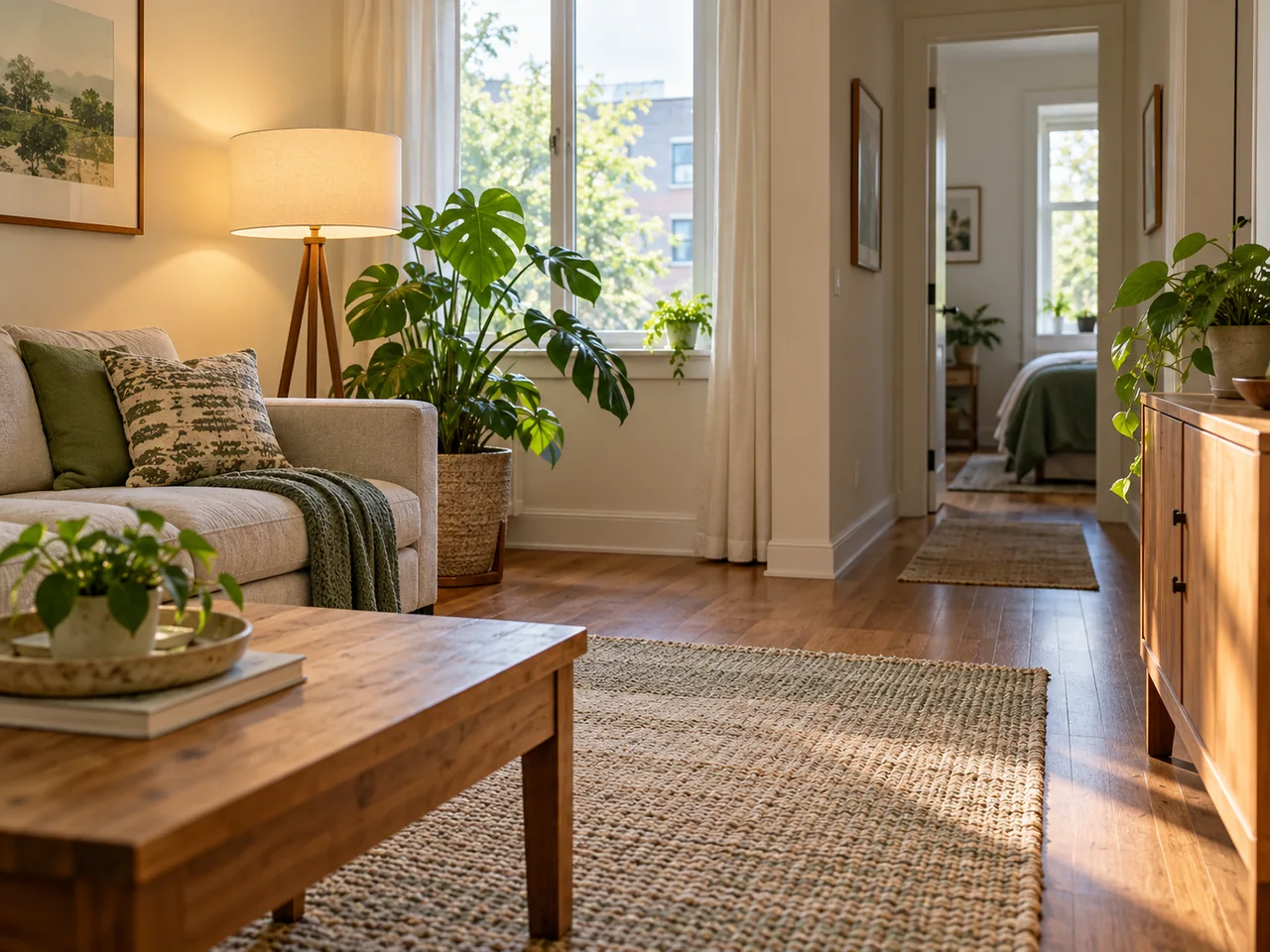
A missing corner is a floor plan problem, not a life problem
In feng shui, a 'missing corner' is any part of a rectangular floor plan that is cut out — an L-shaped house, a room that juts out, or a building where one corner is visibly smaller than the others. The classical theory maps each corner of the house to a life area (wealth, relationships, health, etc.) using the Bagua, and says a missing corner weakens the corresponding area of your life.
The practical version is less dramatic: a missing corner creates an irregular floor plan, and irregular floor plans are harder to furnish, harder to light, and harder to feel settled in. The 'fix' is about making the space feel complete, not about performing a ritual to restore your missing wealth corner.
The three types of missing corners, and which ones actually matter
Not all missing corners are equal. A corner that is 10% missing is a quirk. A corner that is 40% missing is a structural void. Here is the practical scale:
| Type | Definition | Does it matter? |
|---|---|---|
| Minor missing corner | Less than 1/3 of one side of the rectangle is cut out | Barely. This is a slightly irregular room, not a feng shui crisis. Furnish it well and move on. |
| Moderate missing corner | Between 1/3 and 1/2 of one side is missing | It matters for furniture placement and how the room feels. The room will have an awkward corner that is hard to use. Remedies help. |
| Major missing corner | More than 1/2 of one side is missing, or the house is L-shaped | This is a real spatial problem. The missing area creates a dead zone outside the house and an awkward room inside. Structural remedies are worth considering if you own the property. |
Remedies ranked from lightest to heaviest
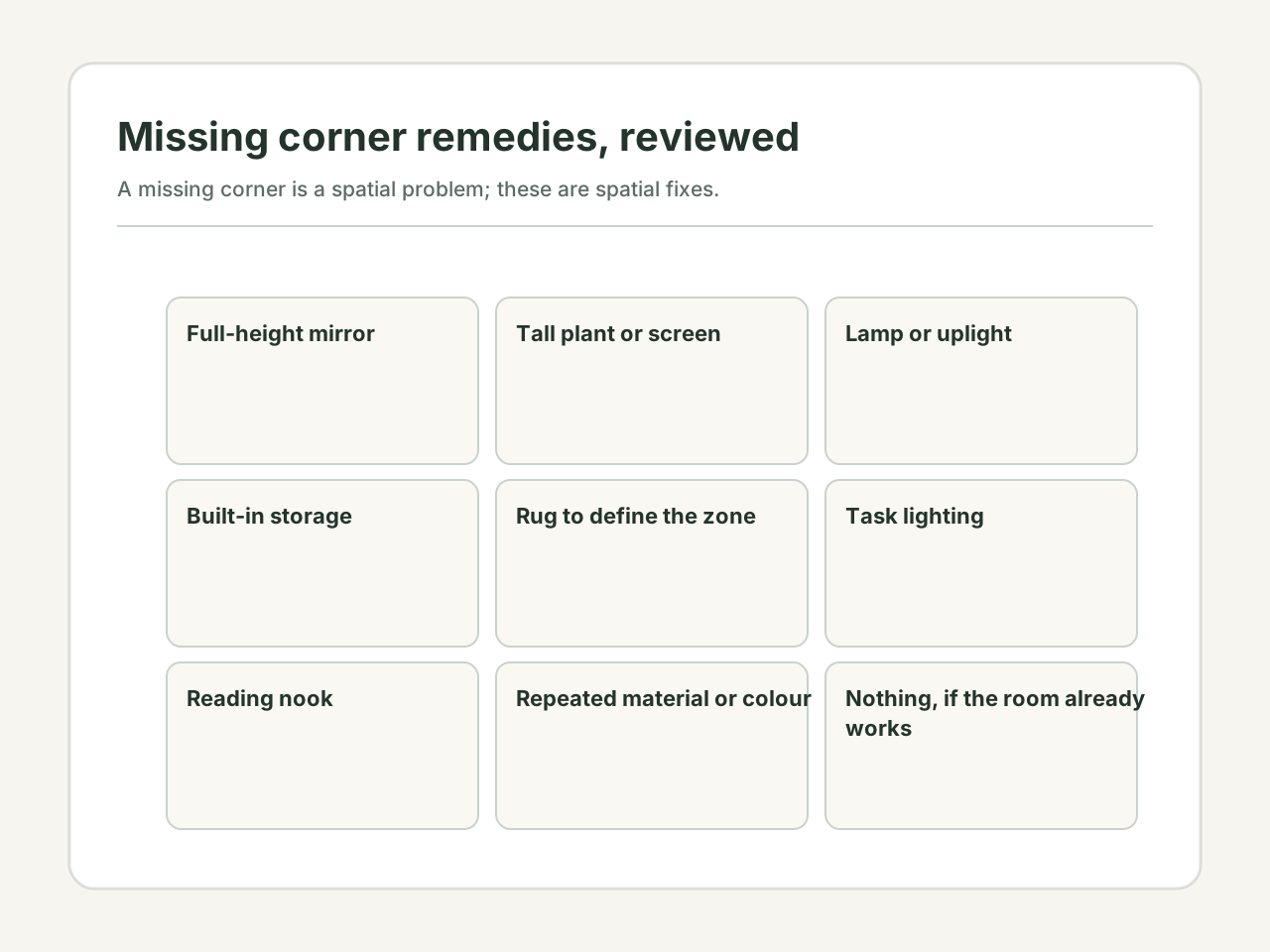
The traditional feng shui remedies for missing corners include mirrors, crystals, plants, and Bagua mirrors. The modern, practical versions are simpler and more effective:
- A mirror on the wall of the missing corner. This is the classic feng shui remedy, and it works — a mirror visually 'completes' the missing corner by reflecting the rest of the room. Place it on the wall that faces into the room, not on the exterior wall. The mirror should be large enough to be noticeable, not a tiny compact mirror.
- A tall plant or floor lamp in the corner. If the missing corner creates an awkward empty space, fill it with something that draws the eye. A tall plant or a statement floor lamp turns a dead zone into a feature. This is the simplest and most effective remedy for a minor missing corner.
- Outdoor lighting to 'complete' the shape. If the missing corner is outside the house (an L-shaped house where the missing corner is part of the garden), use outdoor lighting, a patio, a deck, or a pergola to define the missing area. This makes the outdoor space feel like part of the house rather than an afterthought.
- A trellis, fence, or hedge to enclose the missing corner. If the missing corner is outside, a physical boundary that 'completes' the rectangle visually restores the sense of enclosure. This is more permanent than lighting and creates usable outdoor space.
- A small extension to fill the missing corner. This is the nuclear option — building a conservatory, a small extension, or even a covered porch to make the floor plan a complete rectangle. It is expensive, but it adds square footage and permanently solves the problem.
A worked example: the L-shaped living room
A couple's flat had an L-shaped living room where the missing corner was the dining area. The room was a rectangle with a 2m x 2m chunk cut out of one corner — the result of the building's stairwell eating into the floor plan. The missing corner made the room feel like two disconnected zones: a living area and a narrow alcove that was too small for a dining table and too big to ignore.
The feng shui diagnosis: a missing corner in the 'relationship' or 'family' area of the Bagua (depending on orientation). The practical problem: the alcove was awkward and unusable, and the room never felt finished.
The fix: they placed a large mirror on the wall of the alcove, making it feel twice as deep. They added a small round table with two chairs — not a full dining set, but a breakfast nook that made the alcove a destination. A pendant light above the table defined the zone. On the wall opposite the mirror, they hung a large piece of art that drew the eye across the room.
The result: the alcove went from a dead zone to the most-used spot in the living room. The mirror made the room feel complete, and the breakfast nook gave the missing corner a purpose. Total cost: £150 for the mirror, table, and light.
Missing corners are a spatial problem, not a life problem
Missing corner remedies are spatial fixes for spatial problems. They make an irregular room feel more complete, more usable, and more settled. They do not restore missing wealth, repair broken relationships, or cure health problems. The Bagua mapping of corners to life areas is a traditional framework that can be useful for thinking about what matters to you — but it is a metaphor, not a mechanism. If your living room has a missing corner, fix it with a mirror, a plant, or a lamp. If your life has a missing corner, that requires a different kind of remedy entirely.
Disclaimer: This content is for informational and cultural reference purposes only. It does not constitute professional medical, legal, financial, or psychological advice. Readers should exercise their own judgment and consult qualified professionals for specific concerns.
Sources and review basis
Traditional references explain historical vocabulary and context. Official practical sources support only the observable safety, comfort, or environmental points noted in the article; they do not validate metaphysical claims.
Traditional reference
Huangdi Zhaijing (黄帝宅经)Wikisource digital text · Accessed 2026-07-14
Historical context for traditional residential orientation and spatial vocabulary. Modern recommendations are judged against real conditions.
Practical source
US EPA: Indoor Air QualityUnited States Environmental Protection Agency · Accessed 2026-07-14
Practical background for ventilation, pollutants, combustion sources, and indoor air concerns.