Feng shui for home buying is a filter, not a fortune-telling tool
A feng shui home-buying checklist cannot predict happiness, wealth, health, or how a property will feel after purchase. It can slow a rushed viewing and organize observations that photographs and staging may hide. It supplements, but never replaces, legal checks, an appropriate building survey or inspection, title and planning review, finance, insurance, and qualified advice.
The questions below separate measurable conditions such as light, privacy, access, drainage, noise, moisture, and maintenance from traditional symbolism. Record the condition, cost, uncertainty, and who must verify it. A first impression is evidence of preference, not evidence that a building will create stress or shelter.
The pre-visit checklist: things to check before you even ring the doorbell
Some of the most important feng shui signals are visible from the street. You do not need to go inside for these:
| Check | What to look for | Why it matters |
|---|---|---|
| Street position | Is the property at a junction, turning area, dead end, steep bend, or busy crossing? | Observe headlight sweep, vehicle speed, noise, pedestrian visibility, access, parking, and collision history where reliable data exists. Visit at relevant times; the road shape itself is not a fortune label |
| Neighbouring buildings | Do nearby structures affect the property's light, privacy, wind, view, maintenance access, or future development risk? | A pointed roofline is called sha qi in some traditions, but geometry does not prove psychological or health harm. Measure shadow, overlooking, distance, condition, and planning information |
| Entrance and access | Can residents, visitors, deliveries, and emergency services identify and reach the entrance safely? | Check lighting, steps, gradients, handrails, door clearance, weather exposure, security, and accessible route. A hidden door does not mean a home is energetically inactive |
| Drainage and slope | Where do ground, roof, balcony, and surface water flow, and are there staining, erosion, blocked outlets, or prior flood records? | Do not infer foundation performance from one viewing. Ask the surveyor or drainage professional to assess the site, fabric, records, and local flood information |
| Trees and utilities | Are trees healthy and safely separated from the building and services? Are overhead or buried utilities documented? | Use an arborist, surveyor, and utility guidance for roots, branches, easements, clearances, and maintenance. Do not infer an electromagnetic health risk from the visual presence of a power line |
Inside the house: the 10 things that matter most
Once inside, walk through the house in the order you would use it — front door, living room, kitchen, bedrooms, bathrooms. Do not rush. Pay attention to your gut reaction at each threshold:
- Front door: does it open smoothly and fully? A door that sticks, scrapes, or cannot open all the way because of furniture behind it is a blocked entry. In feng shui, this is the most important door in the house.
- Entryway: is there a clear, unobstructed space to stand and take off your shoes? An entryway that opens directly into a wall or a staircase feels like hitting a barrier. You want a place to pause.
- Staircase position: measure the entrance landing, door swing, headroom, guarding, lighting, accessible route, and whether circulation conflicts. A stair facing the door is a traditional concern, not proof that energy or opportunity escapes; do not add a screen that narrows an exit.
- Kitchen: review extraction, services, work clearances, appliance condition, storage, fire safety, and how cooking relates to shared rooms. A stove visible from the entrance is a wealth symbol in tradition, not a financial or cleanliness defect.
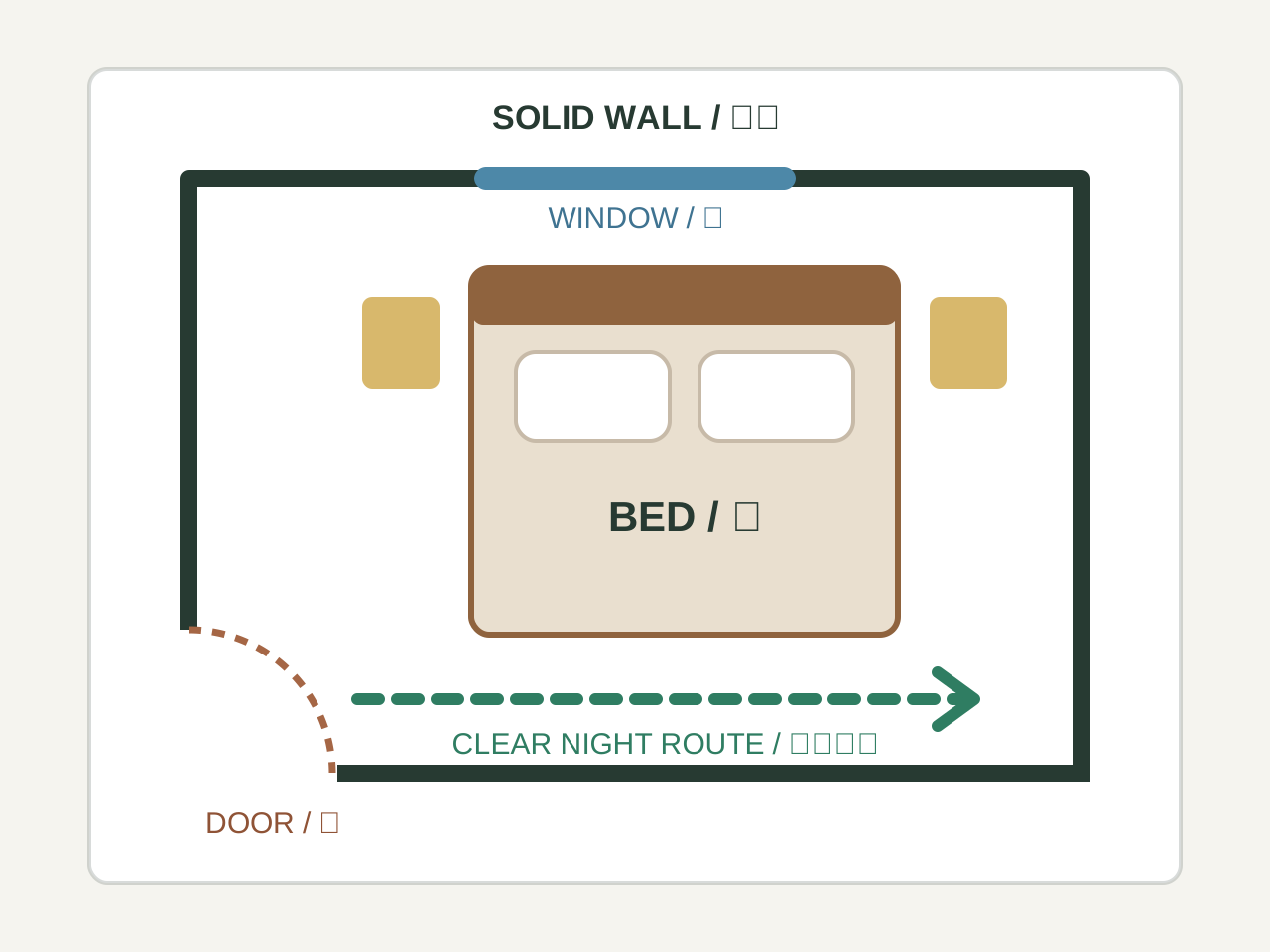
- Bedrooms: test realistic bed positions against dimensions, window and radiator access, sockets, wardrobes, ventilation, fall protection, and safe night routes. Flexibility can be useful, but no feng shui position guarantees rest.
- Bathrooms: inspect extraction, water pressure, drainage, sealant, leaks, odour, privacy, and access. Adjacency to a kitchen or entrance requires a project-specific hygiene and code check, not an automatic rejection.
- Light: observe each room at relevant times and ask about seasonal shade. Orientation effects depend on latitude, glazing, obstructions, insulation, and climate; use actual measurements rather than assuming every south- or north-facing room behaves alike.
- Ceiling height: measure usable headroom, sloped areas, beams, fixtures, and furniture clearance. Some users dislike low or sloped ceilings and others do not; a viewing cannot prove a psychological effect.
- Shape: draw usable dimensions and place essential furniture to find inaccessible corners, circulation conflicts, or wasted area. The traditional Bagua may call an absent sector a missing life area, but that label does not predict a deficit in life.
- Smell and sound: does the house smell damp, musty, or like air freshener covering something? Do you hear road noise, neighbours, or mechanical hums? These are not feng shui in the traditional sense, but they affect how a house feels more than any Bagua mirror ever will.
A worked example: the house that looked perfect on paper
In this fictional example, a couple compares a three-bedroom property against written requirements rather than deciding from listing photographs. Their requirements include a lit step-free or manageable entrance route, safe stair geometry, and a bedroom with specified usable headroom around both sides of the bed.
At the viewing they measure a narrow side entrance, record a steep stair near the door, and find that one side of the proposed bed area drops below 1.5 metres. These observations are not a diagnosis. The couple sends them to the appropriate surveyor, solicitor, insurer, and access adviser, and asks what is compliant, alterable, and costly.
They compare the verified findings with budget, commute, tenure, repairs, and their own tolerance. A different buyer may reasonably accept the same layout. The example shows how to record a mismatch and obtain evidence; it does not prove that the property would be annoying, oppressive, unlucky, or unsuitable for everyone.
Red flags that are harder to fix than others
Rank issues by consequence, uncertainty, authority, and cost rather than by symbolic severity. The examples below are questions for professional verification, not renovation instructions:
| Problem | Fixable? | Typical fix |
|---|---|---|
| Entrance hard to find or reach | Depends on ownership and site | Verify legal entrance, lighting, security, gradients, steps, drainage, signage permission, emergency access, and whether alterations are permitted |
| Stair near the entrance | Depends on measured geometry | Ask the surveyor about compliance and circulation. Do not place furniture, screens, or plants in required landings, door clearances, or escape routes |
| Bedroom with a sloped ceiling | Often structural | Measure usable floor area and headroom, then test furniture and access. Ask whether advertised room use meets local requirements |
| Central bathroom | Services may be costly to change | Inspect ventilation, waterproofing, drainage, leaks, access, and maintenance. Its Bagua position alone is not a defect |
| Irregular floor plan | Function can sometimes be adapted | Measure circulation and furniture fit. Mirrors or plants do not add missing floor area, structure, daylight, or legal use |
| Property at a junction | Site position cannot be moved | Assess actual traffic, visibility, noise, light, air, safety, boundary permissions, insurance, and local records before considering landscaping |
The honest limit
A feng shui home buying checklist is a tool for noticing things you might otherwise miss when you are excited about a property. It helps you evaluate how a house will feel to live in, not just how it looks in photos. But it is not a guarantee of happiness, wealth, or health. A house with perfect feng shui can still have bad neighbours, structural problems, or a leaky roof. A house with terrible feng shui can still be a happy home if the people in it are happy. Use the checklist as one input among many — location, budget, commute, schools — and trust your own experience of the space more than any rule.
Property decision hierarchy
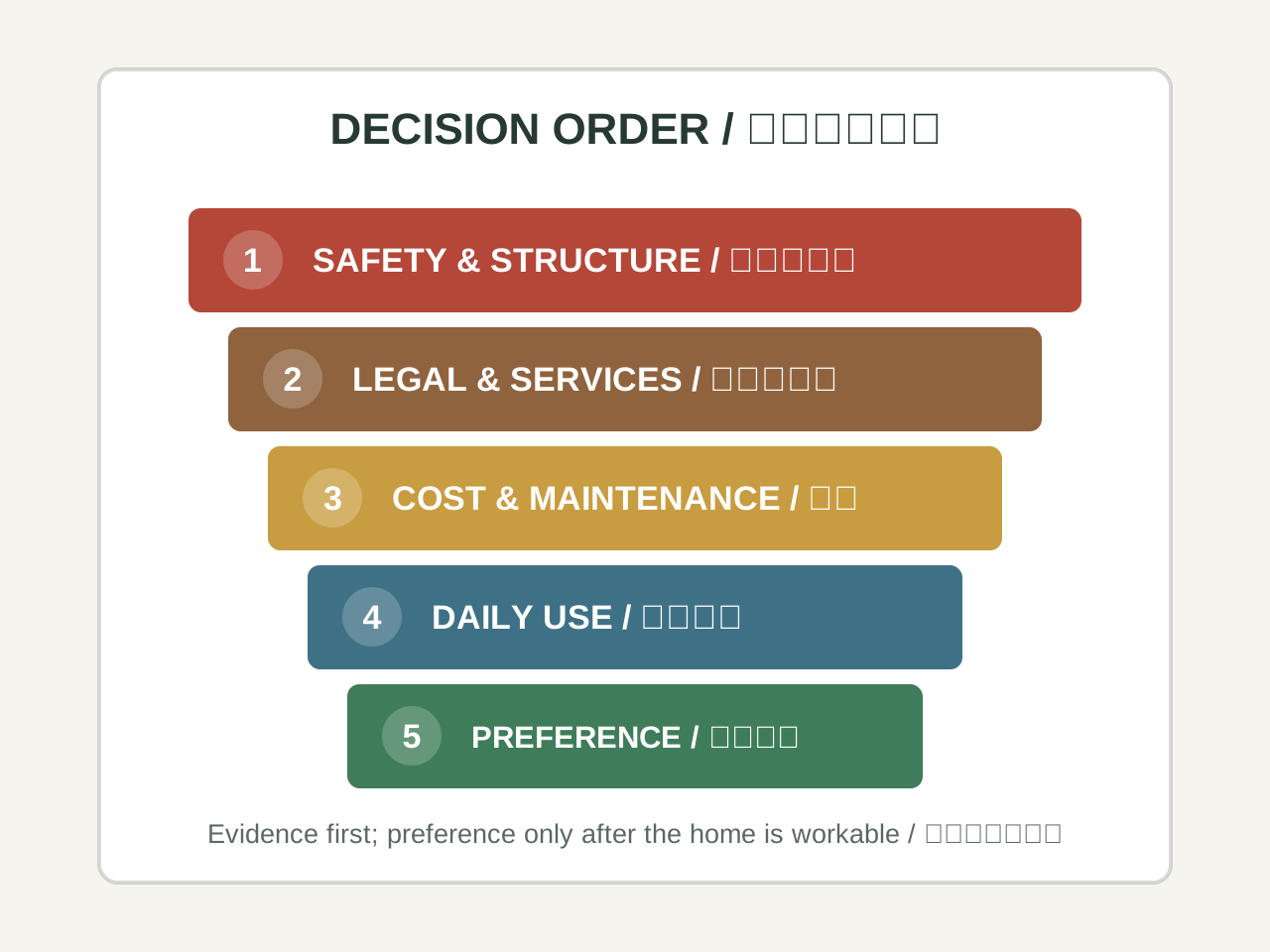
Separate defects that can threaten safety or create major cost from comfort issues and symbolic preferences. Obtain documents or qualified inspections for anything you cannot verify during a viewing.
Do not let a favourable entrance, direction, or emotional first impression cancel evidence of moisture, structure, legal restrictions, unaffordable costs, or an unsuitable location.
| Priority | Examples | Required evidence |
|---|---|---|
| Stop and investigate | Structure, fire, electrical, gas, active leaks, unsafe access | Qualified inspection and written repair scope |
| Budget before deciding | Roof, drainage, windows, insulation, ventilation, major services | Quotes, maintenance records, contingency budget |
| Test daily use | Light, noise, privacy, storage, commute, room dimensions | Repeat visits, measurements, and household review |
| Reversible preference | Colour, loose furniture, decoration, symbolic direction | Low-cost trial after purchase |
| Final decision | Legal, financial, technical, and household fit | Independent checks completed before commitment |
A property checklist before any symbolic layer
Visit a property more than once and at different times. Check moisture, drainage, ventilation, daylight, street noise, mobile reception, storage, shared walls, stairs, lifts, parking, and the route to work or school. Ask for inspection records and read the contract with the appropriate professional. A symbolic orientation cannot compensate for a serious defect or an unaffordable monthly cost.
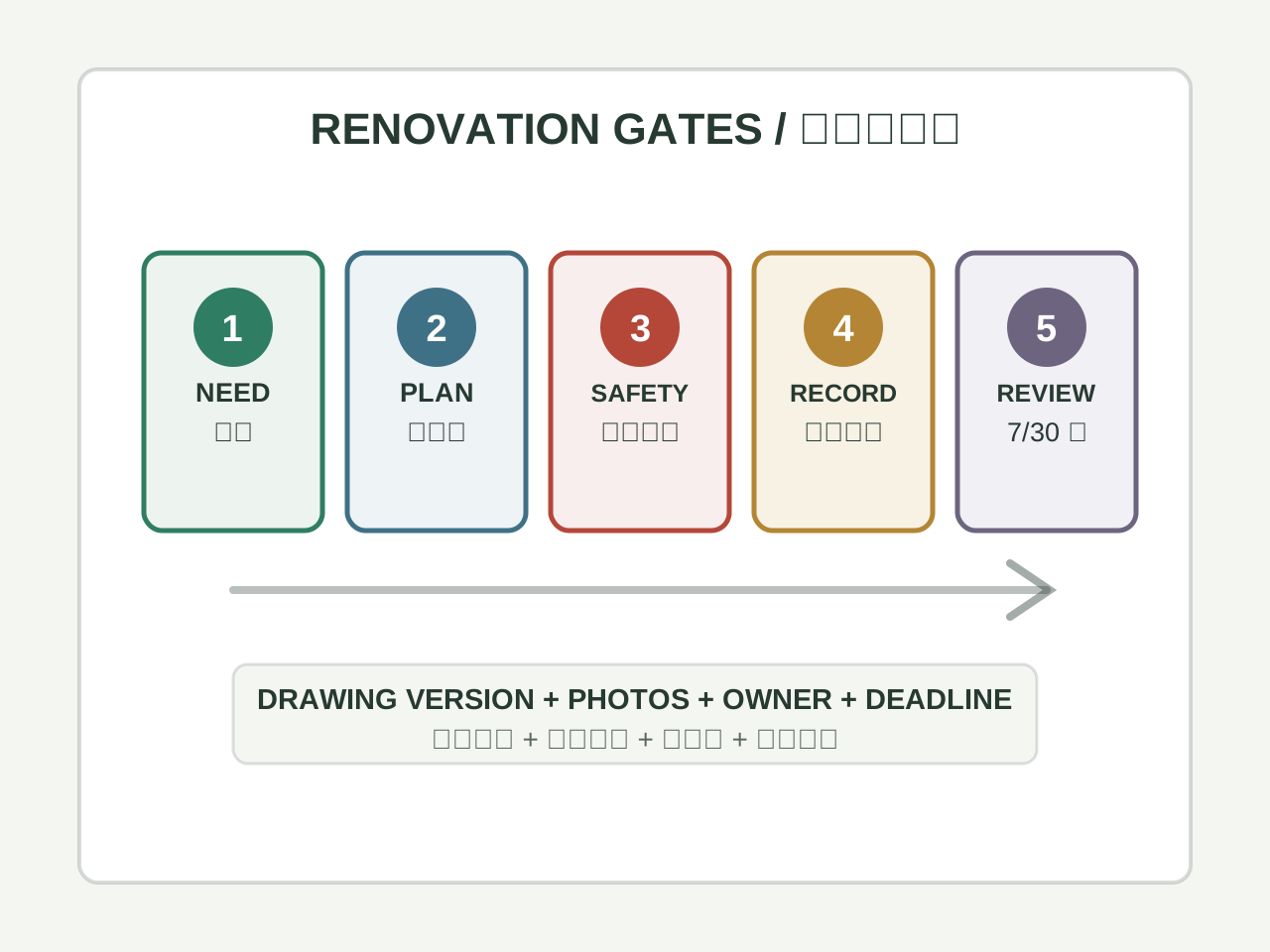
Make a written shortlist with weighted priorities. For one household, quiet sleep may matter most; for another, accessibility or a short commute may matter more. State who made each observation and which point still needs verification. This turns a house visit into due diligence rather than an emotional reaction to a single feature.
- Check the specific issue described in “A property checklist before any symbolic layer” before changing the arrangement or interpretation.
- Keep the action reversible and record what evidence would change the decision.
Comparing two homes honestly
When two homes appear similar, compare their recurring costs and constraints: repairs, management fees, heating or cooling, natural light, noise at night, renovation permissions, and resale or rental conditions. Then, if the household wishes, add a traditional orientation note as a separate column. It should not be allowed to hide a practical disadvantage.
A good decision record includes a reason for rejecting as well as a reason for choosing. That protects the family from rewriting the story later and makes it easier to revisit the decision when circumstances change.
- Check the specific issue described in “Comparing two homes honestly” before changing the arrangement or interpretation.
- Keep the action reversible and record what evidence would change the decision.
Red flags that stop the symbolic discussion
Pause the feng shui discussion when there is structural movement, persistent damp, unsafe wiring, blocked fire access, suspected mould, legal uncertainty, or pressure to sign immediately. Obtain qualified advice and allow time for independent review. Fear-based claims about a “bad house” are not a substitute for evidence.
If a symbolic preference remains after practical checks pass, keep the action low-cost and reversible. Choose furniture and routines that support the household’s real use of the rooms, and do not undertake structural work solely to chase an uncertain outcome.
- Check the specific issue described in “Red flags that stop the symbolic discussion” before changing the arrangement or interpretation.
- Keep the action reversible and record what evidence would change the decision.
A concrete reader question
A useful way to read Home Buying Feng Shui and Property Checklist is to begin with a concrete question rather than a general promise. The page describes review safety, legal checks, dampness, daylight, noise, privacy, circulation, maintenance, and traditional preferences before buying a home. A reader should write down what they want to understand, what information they already have, and what decision still belongs to them. If the question concerns a room, include the people who use it, the route through it, light, sound, maintenance, privacy, and safety. If it concerns a chart, date, symbol, name, dream, face, or palm, preserve the input, source, calendar or dictionary rule, and any uncertainty. This makes the topic specific enough to review instead of allowing a familiar term to stand in for an explanation.
Separate three layers in the notes: what the tradition means, what can be observed now, and what action is practical. A cultural association can be worth studying without being a verified prediction. The distinction is especially important when the topic sounds personal or consequential.
A worked comparison
Use one ordinary case related to Home Buying Feng Shui and Property Checklist. Describe the situation in plain language before applying specialist vocabulary. Then compare two possible readings or actions in a table: input, method, expected implication, observable evidence, cost, risk, affected people, reversibility, and review date. If the topic involves a proposed arrangement, compare access, lighting, noise, comfort, cleaning, privacy, and shared agreement. If it involves a calculation or interpretation, compare the calendar, time boundary, source, school, dictionary, or weighting rule.
Do not hide a disagreement by averaging incompatible methods. State which conclusion changes under which assumption. Write one ordinary explanation beside the traditional one: workload, sleep, communication, budget, maintenance, camera angle, weather, or a simple input error may explain the same experience. A fair comparison makes room for curiosity and correction.
A low-risk next step
Choose one modest next step connected to Home Buying Feng Shui and Property Checklist. Check a source, repeat a measurement, ask the person affected, observe the space at another time, compare two declared inputs, or keep a short record for a defined period. Change only one condition. Before acting, record the baseline and obtain consent if another person or shared space is involved. Avoid structural work, large purchases, or irreversible decisions until the practical issue is understood and the appropriate professional advice has been considered.
Review the result without treating sequence as proof of cause. Record what improved, what became harder, and what did not change. If a practical adjustment helps, acknowledge ordinary reasons that may have contributed. If it fails, undo or revise it rather than escalating automatically or blaming the reader. The value of a small test is that it can change the question.
Sources and limits
A reader should be able to see where the explanation comes from. Record the source, author or tradition, date accessed, terminology, and method used for Home Buying Feng Shui and Property Checklist. Mark whether a statement is historical description, practitioner interpretation, direct observation, or practical advice. These categories should not be blended into a claim of scientific certainty. When two sources use the same word differently, preserve both definitions and explain which one this page follows.
The page is cultural and reflective material. It cannot diagnose illness, guarantee income, determine a person’s fixed character, prove relationship compatibility, replace legal or financial advice, or override safety and consent. Use proportionate language such as traditionally associated, one school interprets, or this input may suggest. Clear limits increase usefulness rather than weakening it.
A review record for future readers
Close a study of Home Buying Feng Shui and Property Checklist with a record another reader could understand months later: original question, inputs, source, method, interpretation, ordinary explanation, action, cost, affected people, observed result, and next review date. Include evidence that did not fit the preferred explanation. If the original input was uncertain, do not rewrite it after the result is known. This preserves the difference between what was known at the beginning and what was learned later.
The reader remains free to disagree, seek another source, postpone action, or stop. If the issue involves health, safety, law, money, employment, structural work, or relationship coercion, use the relevant professional or shared process. The strongest conclusion is often a clearer question and a reversible next step, not a dramatic promise.
Disclaimer: This content is for informational and cultural reference purposes only. It does not constitute professional medical, legal, financial, or psychological advice. Readers should exercise their own judgment and consult qualified professionals for specific concerns.
Sources and review basis
Traditional references explain historical vocabulary and context. Official practical sources support only the observable safety, comfort, or environmental points noted in the article; they do not validate metaphysical claims.
Traditional reference
Huangdi Zhaijing (黄帝宅经)Wikisource digital text · Accessed 2026-07-14
Historical context for traditional residential orientation and spatial vocabulary. Modern recommendations are reviewed separately.
Practical source
US EPA: Indoor Air QualityUnited States Environmental Protection Agency · Accessed 2026-07-14
Practical background for ventilation, pollutants, combustion sources, and indoor air concerns.
Practical source
US EPA: MoldUnited States Environmental Protection Agency · Accessed 2026-07-14
Practical guidance for moisture control and mold prevention in bathrooms, homes, and renovation work.