The single idea behind almost every bed-placement rule
Much contemporary bedroom feng shui advice repeats a preference for support behind the sleeper, a visible approach, and a position outside the main walking route. English-language guides often call this the command position; the label should not be presented as one uniform classical Form School rule. It is a cultural layout preference, not established sleep science.
Use the rule as a comparison prompt rather than a prescription. Check a solid headboard, door sightline, and position outside the main walking route alongside measured light, noise, temperature, ventilation, accessibility, and the needs of every sleeper.
The popular command-position checklist, defined precisely
Contemporary guides use the command-position label inconsistently. For this page it means four separate preferences that must each be checked against the real room:
- Diagonal from the door. The bed sits on the wall farthest from the entrance, usually catty-corner to it, so you can see anyone coming in without sitting up.
- Out of the door's direct path. You can see the door, but the door does not point straight at the bed. Some traditions object to feet pointing toward the door; a modern room review should separately check traffic, privacy, and safe exit access rather than claim one original practical cause.
- A real wall behind the headboard. This is the traditional backing preference. A window in that position may also introduce measurable draft, light, noise, condensation, or restricted access, but check the actual window rather than assuming a problem.
- Access appropriate to the users. Two sleepers often need a safe route on both sides; a single sleeper or someone receiving care may need a different clearance. Symmetry and matching nightstands are preferences, not safety rules.
A worked example: the wall you want is never free
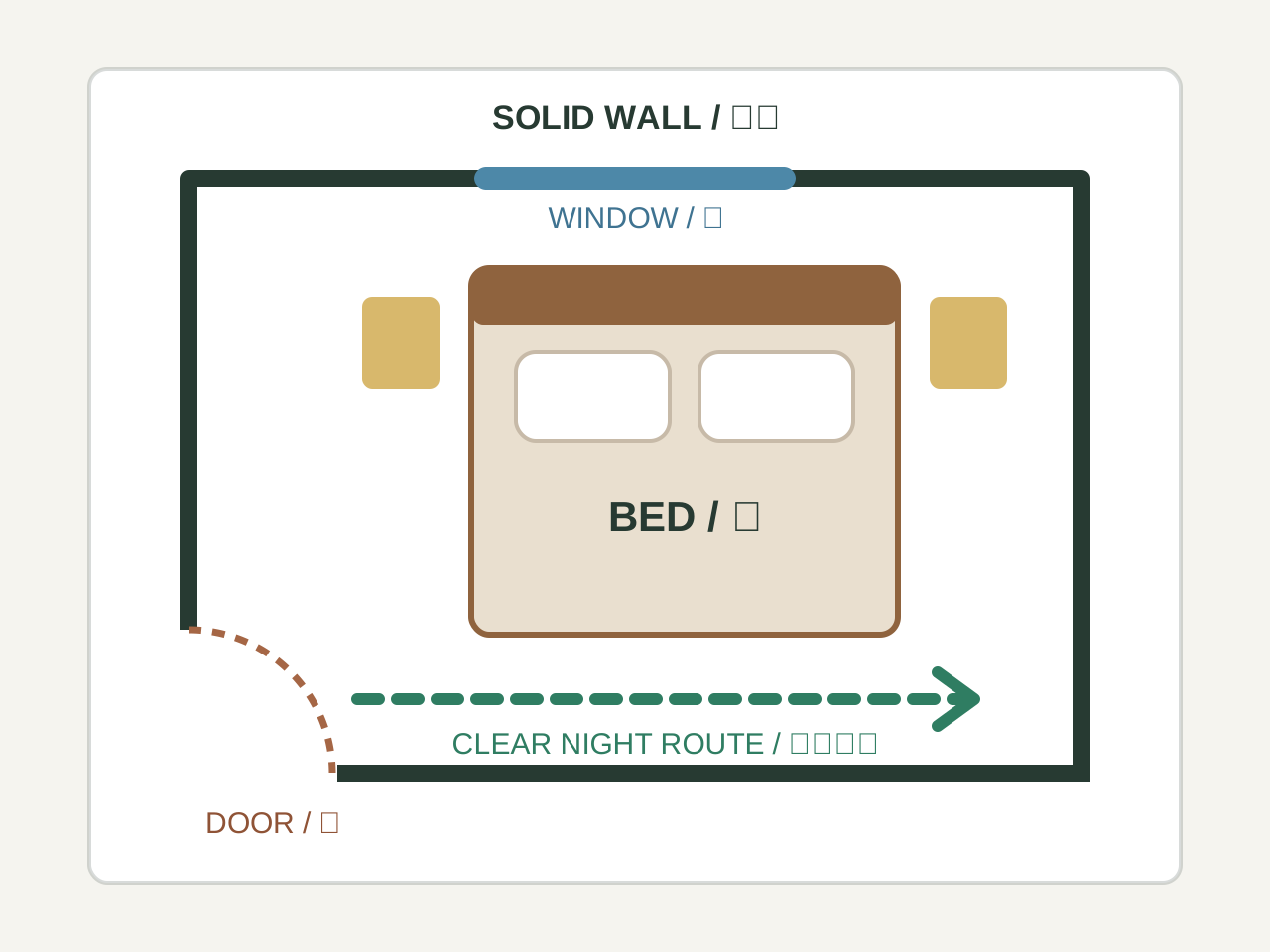
Here is the situation almost everyone actually faces. A small bedroom, roughly 3 by 3.5 metres, has the door on one short wall, a window on the opposite wall, and a fitted closet on the third. The only wall that gives a true command position is the one with the window.
The textbook answer (just move the bed) is impossible, so compare the real constraints. Keep required exits, heaters, vents, window controls, and accessible routes clear. If a headboard sits below a window, verify that it does not obstruct escape or ventilation, then test light and noise controls that can be removed easily. A workable, code-compliant room matters more than a perfect chart.
Mirrors, electronics, and what hangs above your head
These are the details that quietly turn a calm layout busy, and most have a plain-language reason sitting underneath the tradition:
- Mirrors facing the bed. The classic worry is that a reflection disturbs rest. A mirror may also reflect movement or streetlight, but whether that matters is personal and testable. Cover or angle it for several nights and compare rather than assuming it harms sleep.
- Heavy objects or shelves above the headboard. Traditional readings describe overhead pressure. Practically, verify the wall, fixings, load, and installation; remove an unstable item or ask a qualified installer instead of relying on visual reassurance.
- Exposed beams or a sloped ceiling over the bed. Treat the symbolic concern separately from measurable head clearance, fixtures, structural condition, and user comfort. Rotating the bed does not repair a defect.
- Screens and chargers at the bedside. Light, sound, notifications, cable condition, and individual habits can be checked directly. Move or silence a device when it repeatedly disrupts the routine; do not claim that every bedside device has the same effect.
Beliefs worth understanding, not just obeying
Some rules are worth knowing precisely because family or clients will raise them. Knowing the original reasoning lets you decide what to keep and what to let go.
| Common rule | Traditional reason | How to read it today |
|---|---|---|
| Feet should not point out the door | Linked in some communities to funeral customs | Treat the cultural concern separately; check the walking route, privacy, door swing, and emergency access without inventing one universal practical explanation |
| No bed under a window | Weak backing and unstable energy behind the head | Check escape requirements, window operation, draft, light, noise, condensation, security, and safe installation; curtains and a headboard do not solve every condition |
| Bed not sharing a wall with a toilet | Water and waste behind the head | Listen for plumbing noise and inspect damp or leaks. Repair the cause; do not hide a moisture problem behind a bookcase |
| No bed directly under a beam | Downward pressure over the sleeping body | Treat discomfort as an individual response; first check head clearance, fixtures, structural condition, and whether another safe position is available |
When the bed genuinely cannot move
Rented rooms, fixed radiators and odd layouts are the norm, not the exception. The goal is not a perfect chart. Test one reversible change at a time and keep it only if the same sleep diary or room measurement improves:
- If visual backing matters to the sleeper, test a stable headboard that does not block a window, vent, heater, control, or required exit. It remains a preference and does not replace a wall or repair a building problem.
- Control light and sightlines: blackout curtains, and cover or angle any mirror that catches the bed.
- Clear the floor path from door to bed so the room reads as open rather than obstructed.
- Provide the lighting, controls, storage, and assistance route each sleeper actually needs; matching items on both sides are optional.
Where this guidance comes from
This page separates widely circulated contemporary placement advice from traditional residential vocabulary in the Huangdi Zhaijing reference below. That historical source does not validate the modern command-position checklist or a sleep benefit. We have left out birth-chart and direction prescriptions, which vary by school and are easy to over-claim. Record light, noise, temperature, access, routine, and comfort before and after a reversible change; persistent sleep problems belong with a qualified health professional, not a room chart.
Run a seven-night placement check
Draw the room with the door, windows, radiator or air vent, wardrobes, sockets, and walking clearances. Compare no more than two feasible bed positions. Check headboard support, door visibility, nighttime access, glare, drafts, noise, and whether both sleepers can enter without climbing over each other.
Use the safer practical position for seven nights and record bedtime, awakenings, temperature discomfort, noise, and morning obstacles. This is not a clinical sleep study, but it reveals whether the layout creates repeated friction. Stop immediately if a trial blocks an exit, places furniture near unsafe wiring or heating, or worsens a health or mobility need.
Traditional command-position language can be a useful description of visual security, but it does not prove that one compass direction improves health or relationships. Keep the arrangement that supports rest and movement, even when it differs from a symbolic preference.
When moving the bed is not the right fix
Do not keep rearranging furniture when the main cause is persistent noise, unsafe heating, dampness, a damaged bed, severe temperature change, or a health concern. Document the condition, use the appropriate building or health support, and keep exits and care routes clear. A stable routine and a safe room matter more than achieving a symbolic direction.
Bed-position comparison sheet
Score only positions that are physically possible and safe. Complete the sheet in daylight and again after dark because glare, privacy, drafts, noise, and access can change at night.
When two sleepers use the room, record each person’s experience separately. A visually balanced layout is not successful if one person loses safe access, sleep comfort, or necessary care space.
| Signal | What to observe | Low-risk response |
|---|---|---|
| Exit and access | Clear route to the door, both sides of the bed, mobility needs | Remove obstacles and preserve emergency access |
| Light | Window glare, street light, early sunlight, switch access | Test curtains, task lighting, or a small position change |
| Air and temperature | Drafts, vents, radiator distance, condensation | Correct ventilation or heating causes before moving repeatedly |
| Noise and privacy | Door traffic, shared walls, reflected views | Test door seals, soft materials, or a privacy screen |
| Sleep review | Seven-night routine, awakenings, morning obstacles | Keep only changes that support rest and daily movement |
Start with sleep conditions
Bed placement should begin with temperature, ventilation, light, noise, mattress support, safe access, and the user’s routine. Check whether doors, windows, radiators, fans, and morning light affect sleep. Also leave enough clearance to clean and to move safely at night. These are practical conditions that can be observed without accepting a symbolic premise.
If two adults share the room, include both sleep patterns and accessibility needs. A position that feels private to one person may make the other feel trapped or make a route difficult. The best arrangement is negotiated and safe, not merely associated with a traditional rule.
- Check the specific issue described in “Start with sleep conditions” before changing the arrangement or interpretation.
- Keep the action reversible and record what evidence would change the decision.
A bedroom case with competing priorities
A bed placed against a solid wall may feel stable, but the same room may become too hot because the radiator is beside it. Moving the bed may improve airflow while changing the sightline to the door. Record both effects and use curtains, ventilation, temperature control, or a different orientation before treating the trade-off as a personal omen.
Avoid placing heavy objects above the bed, blocking exits, or creating trip hazards to satisfy a layout preference. If sleep problems persist, review health, stress, noise, and routine factors and seek appropriate advice rather than continually rearranging furniture.
- Check the specific issue described in “A bedroom case with competing priorities” before changing the arrangement or interpretation.
- Keep the action reversible and record what evidence would change the decision.
A seven-night review
Choose one reversible change and keep it for a week. Note bedtime, wake time, noise, light, temperature, and subjective restfulness. Do not treat one night as proof. If the change helps, identify the likely practical reason; if it does not, undo it without fear or blame.
This approach lets readers use traditional bedroom ideas as a prompt for attention while keeping sleep, safety, and personal wellbeing at the centre of the decision.
- Check the specific issue described in “A seven-night review” before changing the arrangement or interpretation.
- Keep the action reversible and record what evidence would change the decision.
A concrete reader question
A useful way to read Bedroom Feng Shui Bed Placement is to begin with a concrete question rather than a general promise. The page describes learn practical bedroom feng shui ideas for bed direction, wall support, door alignment, mirrors, and calming layout choices. A reader should write down what they want to understand, what information they already have, and what decision still belongs to them. If the question concerns a room, include the people who use it, the route through it, light, sound, maintenance, privacy, and safety. If it concerns a chart, date, symbol, name, dream, face, or palm, preserve the input, source, calendar or dictionary rule, and any uncertainty. This makes the topic specific enough to review instead of allowing a familiar term to stand in for an explanation.
Separate three layers in the notes: what the tradition means, what can be observed now, and what action is practical. A cultural association can be worth studying without being a verified prediction. The distinction is especially important when the topic sounds personal or consequential.
A worked comparison
Use one ordinary case related to Bedroom Feng Shui Bed Placement. Describe the situation in plain language before applying specialist vocabulary. Then compare two possible readings or actions in a table: input, method, expected implication, observable evidence, cost, risk, affected people, reversibility, and review date. If the topic involves a proposed arrangement, compare access, lighting, noise, comfort, cleaning, privacy, and shared agreement. If it involves a calculation or interpretation, compare the calendar, time boundary, source, school, dictionary, or weighting rule.
Do not hide a disagreement by averaging incompatible methods. State which conclusion changes under which assumption. Write one ordinary explanation beside the traditional one: workload, sleep, communication, budget, maintenance, camera angle, weather, or a simple input error may explain the same experience. A fair comparison makes room for curiosity and correction.
A low-risk next step
Choose one modest next step connected to Bedroom Feng Shui Bed Placement. Check a source, repeat a measurement, ask the person affected, observe the space at another time, compare two declared inputs, or keep a short record for a defined period. Change only one condition. Before acting, record the baseline and obtain consent if another person or shared space is involved. Avoid structural work, large purchases, or irreversible decisions until the practical issue is understood and the appropriate professional advice has been considered.
Review the result without treating sequence as proof of cause. Record what improved, what became harder, and what did not change. If a practical adjustment helps, acknowledge ordinary reasons that may have contributed. If it fails, undo or revise it rather than escalating automatically or blaming the reader. The value of a small test is that it can change the question.
Sources and limits
A reader should be able to see where the explanation comes from. Record the source, author or tradition, date accessed, terminology, and method used for Bedroom Feng Shui Bed Placement. Mark whether a statement is historical description, practitioner interpretation, direct observation, or practical advice. These categories should not be blended into a claim of scientific certainty. When two sources use the same word differently, preserve both definitions and explain which one this page follows.
The page is cultural and reflective material. It cannot diagnose illness, guarantee income, determine a person’s fixed character, prove relationship compatibility, replace legal or financial advice, or override safety and consent. Use proportionate language such as traditionally associated, one school interprets, or this input may suggest. Clear limits increase usefulness rather than weakening it.
A review record for future readers
Close a study of Bedroom Feng Shui Bed Placement with a record another reader could understand months later: original question, inputs, source, method, interpretation, ordinary explanation, action, cost, affected people, observed result, and next review date. Include evidence that did not fit the preferred explanation. If the original input was uncertain, do not rewrite it after the result is known. This preserves the difference between what was known at the beginning and what was learned later.
The reader remains free to disagree, seek another source, postpone action, or stop. If the issue involves health, safety, law, money, employment, structural work, or relationship coercion, use the relevant professional or shared process. The strongest conclusion is often a clearer question and a reversible next step, not a dramatic promise.
Disclaimer: This content is for informational and cultural reference purposes only. It does not constitute professional medical, legal, financial, or psychological advice. Readers should exercise their own judgment and consult qualified professionals for specific concerns.
Sources and review basis
Traditional references explain historical vocabulary and context. Official practical sources support only the observable safety, comfort, or environmental points noted in the article; they do not validate metaphysical claims.
Traditional reference
Huangdi Zhaijing (黄帝宅经)Wikisource digital text · Accessed 2026-07-14
Historical context for traditional residential orientation and spatial vocabulary. Modern recommendations are reviewed separately.
Practical source
US NIH/NHLBI: Healthy Sleep HabitsNational Heart, Lung, and Blood Institute, NIH · Accessed 2026-07-14
Health background for sleep routines and bedroom conditions; it does not endorse directional feng shui claims.