Office efficiency is about removing friction, not placing lucky objects
Office feng shui is often marketed as a way to boost productivity by placing a crystal on your desk, hanging a wind chime in the corner, or positioning your desk to face a 'prosperity direction'. The implication is that the arrangement of objects in your office can directly affect your output.
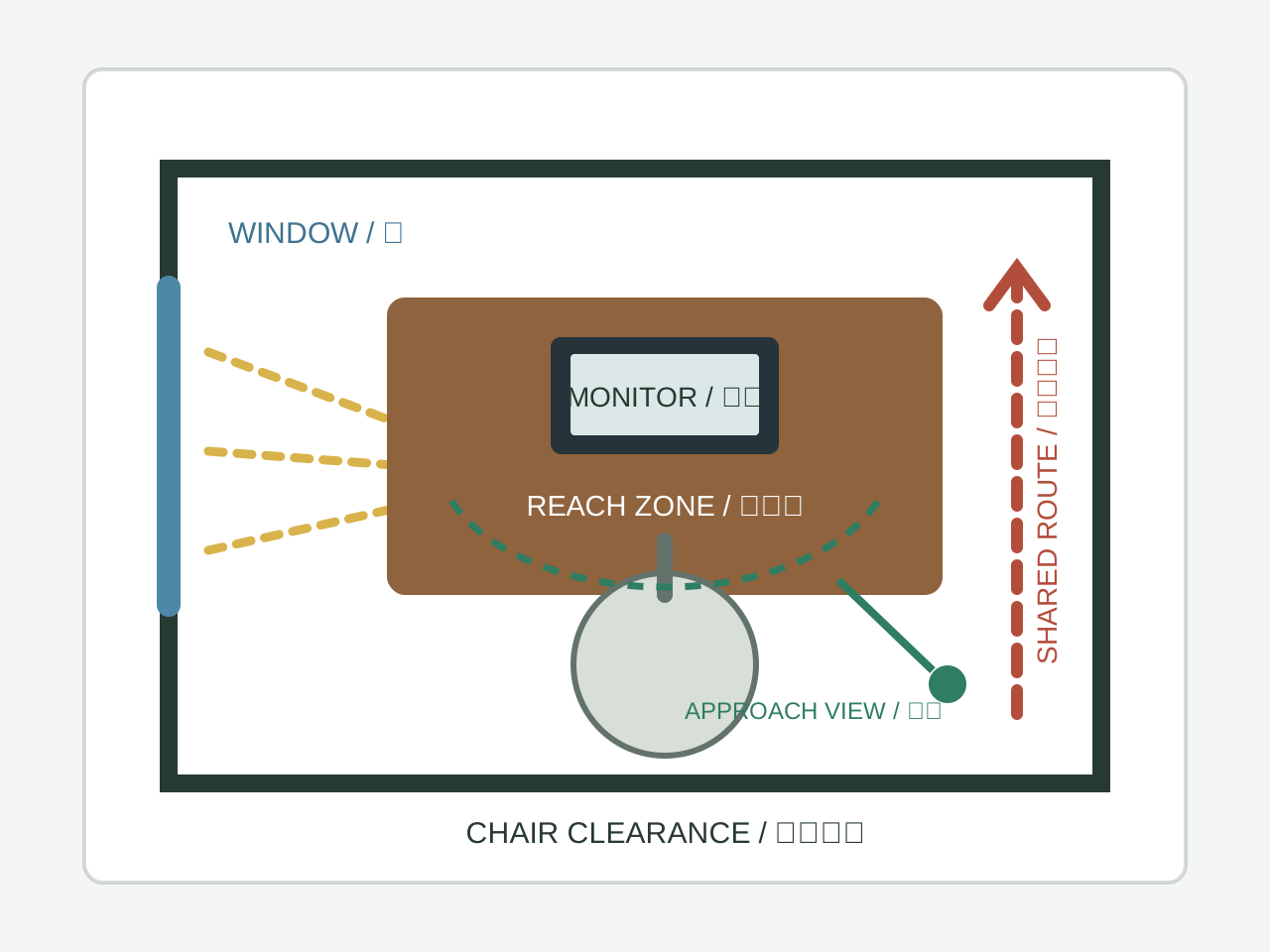
The honest view: a workspace can add or remove physical friction, but it does not determine output by itself. Workload, process, tools, management, skill, health, breaks, and collaboration also matter. Check light, chair adjustment, reach, cable hazards, noise, privacy, and circulation as separate conditions; do not convert them into a promised productivity score.
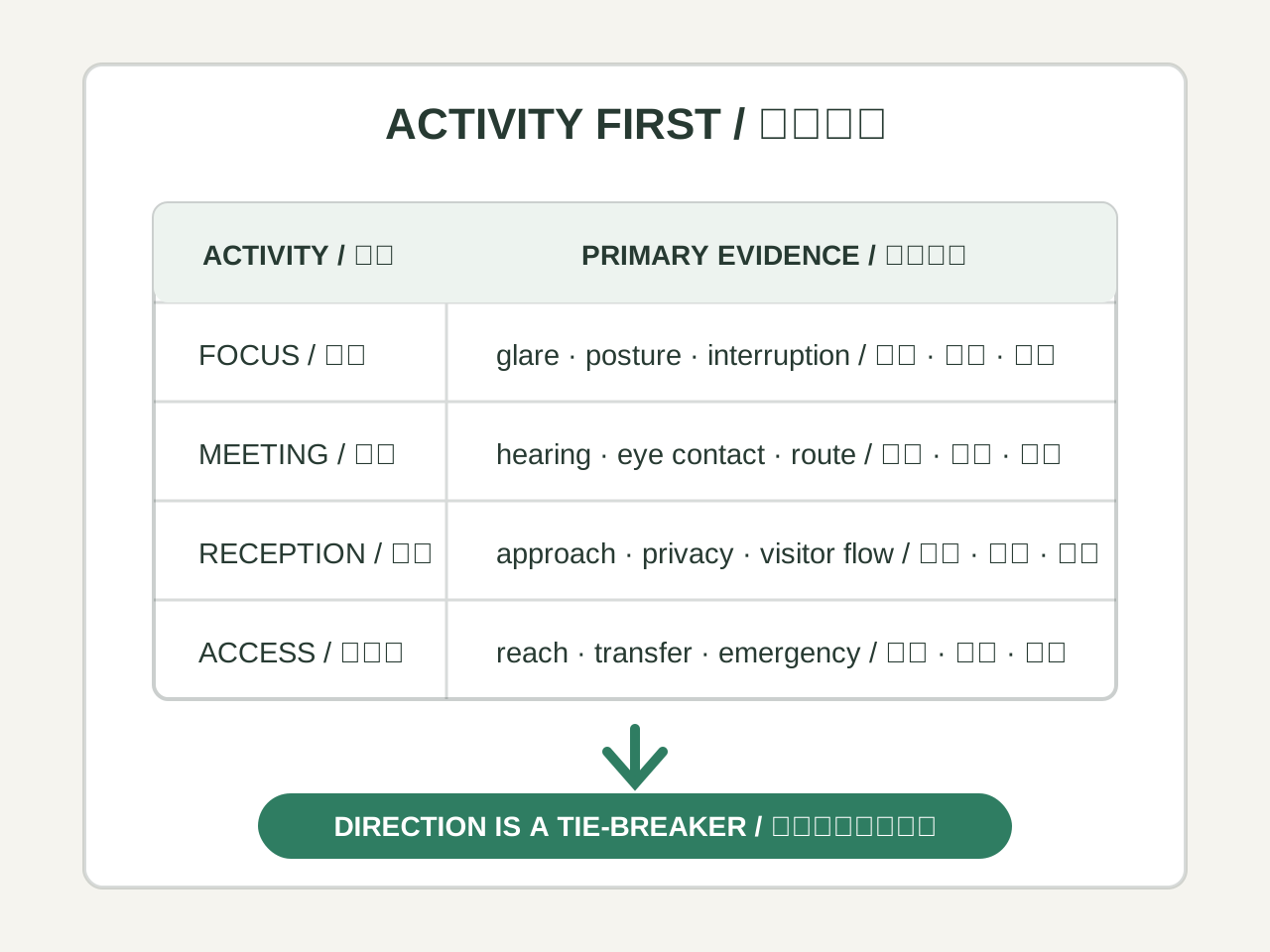
Translate four traditional claims into checks
The table separates the traditional wording from what can be inspected. A practical check does not validate the traditional causal claim:
| Traditional advice | What it says | The practical reality |
|---|---|---|
| Desk facing the door (command position) | The entrance remains visible without sitting in its direct line | Record approaches and worker preference. A visible door may help coordination or create distraction; it does not prove lower alertness or better focus |
| Solid wall behind your back (mountain support) | The chair has a solid surface behind it rather than a window or walkway | Check glare, approach direction, audibility, ventilation, and chair clearance separately. A high-backed chair is not the same intervention as a wall |
| No sharp corners pointing at you (poison arrow) | Avoid a cabinet, pillar, or wall edge directed toward the seat | Check collision and snag hazards, required clearance, and the worker's visual preference. Do not add a plant or screen if it blocks access, light, ventilation, or sightlines |
| Natural light and ventilation | The office should have useful light and adequate air exchange | Measure glare, readable contrast, temperature, ventilation, and reported discomfort under occupational guidance. A window alone does not establish adequate lighting or indoor air quality |
Three desk conditions you can inspect without promising output
These checks can remove specific obstacles. Test the relevant measure before and after rather than claiming that every worker becomes more productive:
- Clear the required work area. Keep controls, input devices, documents, and assistive equipment within the user's reach, and move unrelated items only with the user's agreement. Record retrieval time or blocked space if that is the stated problem; visual minimalism is not a universal performance requirement.
- Manage cables as a safety and maintenance task. Record where a cable crosses foot space, is pulled tight, or interferes with cleaning. Use equipment and routing approved by the workplace, such as a cable tray or a floor-rated cover; ordinary tape and improvised fasteners can create new trip, heat, or maintenance problems.
- Separate activities when useful. If one desk serves work, meals, study, and personal administration, a closing routine may help the user organise equipment and protect breaks. Treat this as an individual routine to test, not proof that the desk controls attention.
Worked experiment: reorganising one cubicle
In this fictional example, a software engineer reports slow document retrieval, cable contact at her feet, and frequent unplanned approaches. Before moving anything, she records retrieval time, cable incidents, approaches during two daily focus blocks, and discomfort for five workdays.
With the worker and facilities owner, an ergonomics review fixes monitor height and reach. The first experiment changes only cable routing and document storage; the second week records the same measures. A later approach-visibility test is separate and must preserve screen privacy, safe circulation, and team communication.
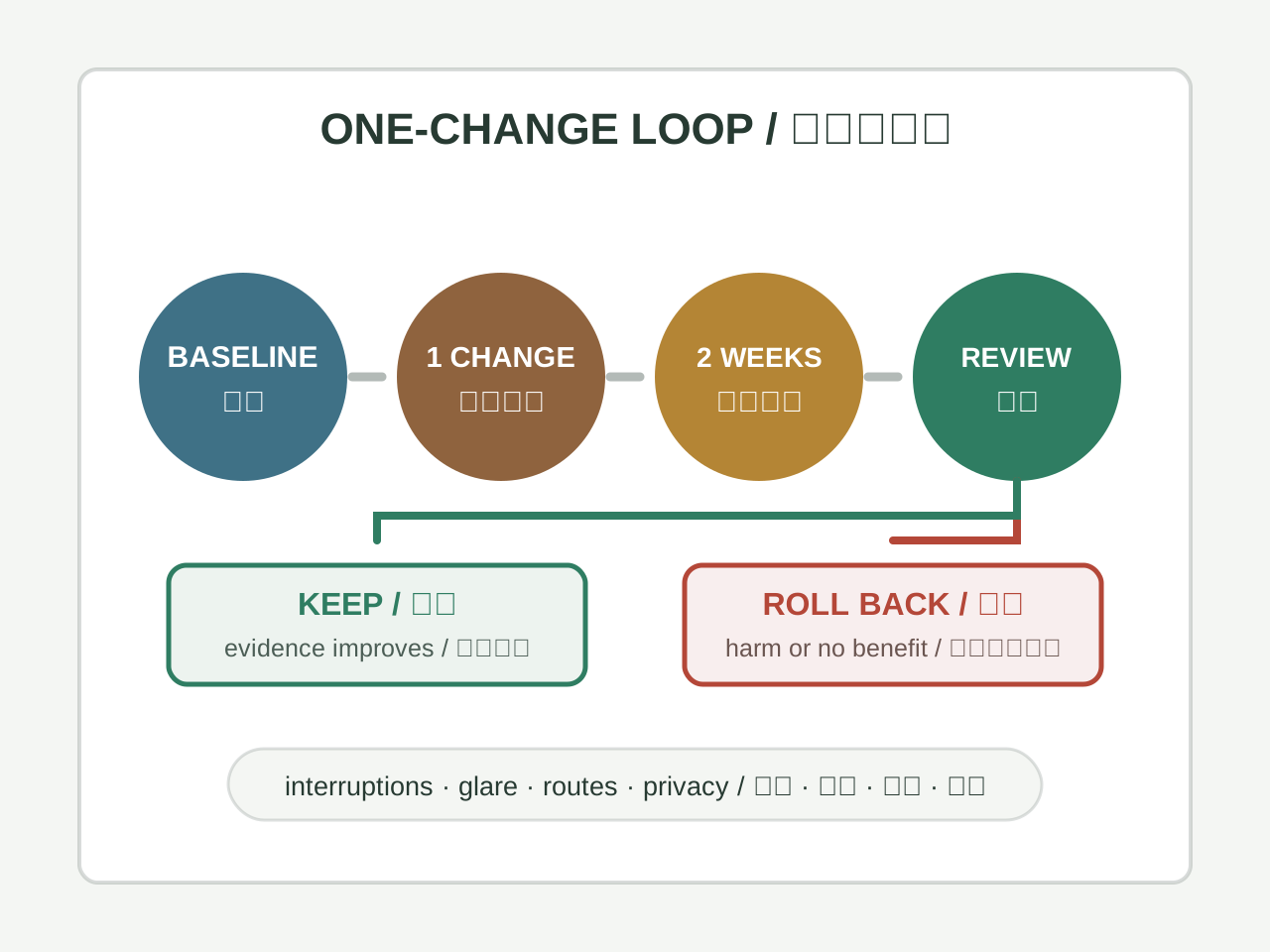
The team keeps a change only when its target measure improves without creating another problem. The record can support a claim about that workstation during that period; it cannot show that clear qi, a mirror, a plant, or a compass direction improved productivity.
The honest limit
Office feng shui can be a prompt to inspect a workspace, but neither symbolic objects nor a tidy layout proves an efficiency gain. Start with a defined problem and an appropriate measure: glare, noise, reach, clearance, retrieval time, interruption count, or reported discomfort. Use qualified ergonomics, occupational health, accessibility, facilities, and worker input; change one reversible variable, review it, and roll it back when the evidence or affected users do not support it.
Build a measurable office review
Choose one operational problem such as interruptions, long walking routes, meeting-room conflict, glare, noise, or storage delay. Record a baseline for one working week and map where the problem occurs. Then test one reversible layout or process change with a named owner and review date.
Measure the result with task-appropriate evidence: interruption counts, time to retrieve materials, room booking conflicts, employee feedback, or safety observations. A change that looks balanced but makes work slower is not successful. Keep traditional positioning as a secondary design vocabulary, not a claim that the room guarantees productivity or revenue.
Shared changes require accessibility, fire-route, electrical, cleaning, privacy, and team approval checks. Escalate building or health issues instead of trying to solve them with plants, mirrors, crystals, or direction rules.
Separate a spatial cause from an operational cause
Before moving furniture, classify the evidence. A glare period, blocked route, unsafe cable, inaccessible control, or long retrieval path is spatial. A queue caused by staffing, unclear ownership, duplicated approval, missing software access, or workload is operational. Some problems contain both causes, so assign each part to the person who can change it.
For example, a team may blame a meeting-room location for repeated booking conflicts. Compare room capacity, equipment, accessibility, walking time, booking records, cancellation patterns, and meeting policy. If suitable rooms sit empty while one room is double-booked, change allocation or process before paying for construction or adding symbolic layout treatments.
The CCOHS office-ergonomics reference supports workstation setup, posture, reach, lighting, and comfort checks. The US EPA indoor-air reference supports ventilation and pollutant concerns. Neither source shows that a command position, plant, colour, or compass direction raises productivity. Keep those evidence boundaries beside the recommendation.
Agree on a team stop condition
Before the test starts, define when the change must be paused: blocked circulation, confidentiality loss, new discomfort, slower emergency access, or repeated team complaints. A visible stop condition protects shared users and keeps the experiment reversible. Record the person authorised to stop the test, how the previous arrangement will be restored, and which same baseline measure will be reviewed after rollback.
Office change experiment
Define one operational problem and its owner before changing the space. Use a normal working week for the baseline, then compare the same metric after one reversible change.
Separate spatial evidence from workload, staffing, management, or software problems. A plant, direction, or furniture move cannot repair a process whose cause is outside the room.
| Problem | Useful measure | Decision after review |
|---|---|---|
| Frequent interruption | Unplanned approaches by team, time, and location | Keep zoning only if access to needed collaboration remains |
| Long retrieval route | Time and steps for common materials | Move storage when the route shortens without blocking circulation |
| Meeting conflict | Booking collisions, room suitability, unused capacity | Change allocation or process before adding more rooms |
| Noise or glare | Time, source, affected tasks, user feedback | Treat the source and escalate building issues |
| Team flow | Task handoffs, accessibility, privacy, emergency access | Approve only when shared impact is acceptable |
Separate productivity claims from room conditions
A room cannot be credited with productivity by symbolism alone. Start with the work system: what task is being performed, how long concentration is needed, which interruptions are unavoidable, and what the worker can control. Then inspect light, temperature, noise, chair support, screen position, storage, and meeting traffic. These conditions are concrete enough to improve or document without making a metaphysical claim.
Use a simple before-and-after note rather than a dramatic promise. Record the task completed, interruption count, and comfort rating for several comparable work periods. A single good afternoon is not proof, and a bad afternoon may reflect workload or sleep. The purpose is to make a sensible workplace decision, not to turn a room into a guarantee.
- Check the specific issue described in “Separate productivity claims from room conditions” before changing the arrangement or interpretation.
- Keep the action reversible and record what evidence would change the decision.
A measurable office experiment
Choose one change, such as moving a monitor away from glare or creating a labelled place for active files. Keep the change for five working days and record what happened. If several people share the room, ask whether the change helps one person while creating a problem for another. A successful office adjustment is usually a negotiated improvement, not a perfect arrangement for one desk.
Traditional placement ideas can be used as a prompt to notice orientation, boundaries, and clutter. Translate each idea into a safe observation: can the worker see the entrance, can the chair be adjusted, is the route clear, and can the surface be reset at the end of the day?
- Check the specific issue described in “A measurable office experiment” before changing the arrangement or interpretation.
- Keep the action reversible and record what evidence would change the decision.
Limits for managers and employees
Managers should not use feng shui language to evaluate a worker’s character or performance. Employees should not be pressured to buy objects, disclose private beliefs, or accept an unsafe seating arrangement. If the concern involves lighting, ergonomics, accessibility, air quality, or harassment, use the relevant workplace process and professional guidance.
A useful guide leaves the reader with choices: what to inspect today, what to test next week, and when to stop experimenting. That structure respects the reader as a decision-maker and keeps symbolic interpretation subordinate to a healthy, workable environment.
- Check the specific issue described in “Limits for managers and employees” before changing the arrangement or interpretation.
- Keep the action reversible and record what evidence would change the decision.
A concrete reader question
A useful way to read Office Feng Shui for Focus and Efficiency is to begin with a concrete question rather than a general promise. The page describes review lighting, noise, air, ergonomics, storage, circulation, and team rules, then test whether one change reduces work friction. A reader should write down what they want to understand, what information they already have, and what decision still belongs to them. If the question concerns a room, include the people who use it, the route through it, light, sound, maintenance, privacy, and safety. If it concerns a chart, date, symbol, name, dream, face, or palm, preserve the input, source, calendar or dictionary rule, and any uncertainty. This makes the topic specific enough to review instead of allowing a familiar term to stand in for an explanation.
Separate three layers in the notes: what the tradition means, what can be observed now, and what action is practical. A cultural association can be worth studying without being a verified prediction. The distinction is especially important when the topic sounds personal or consequential.
A worked comparison
Use one ordinary case related to Office Feng Shui for Focus and Efficiency. Describe the situation in plain language before applying specialist vocabulary. Then compare two possible readings or actions in a table: input, method, expected implication, observable evidence, cost, risk, affected people, reversibility, and review date. If the topic involves a proposed arrangement, compare access, lighting, noise, comfort, cleaning, privacy, and shared agreement. If it involves a calculation or interpretation, compare the calendar, time boundary, source, school, dictionary, or weighting rule.
Do not hide a disagreement by averaging incompatible methods. State which conclusion changes under which assumption. Write one ordinary explanation beside the traditional one: workload, sleep, communication, budget, maintenance, camera angle, weather, or a simple input error may explain the same experience. A fair comparison makes room for curiosity and correction.
A low-risk next step
Choose one modest next step connected to Office Feng Shui for Focus and Efficiency. Check a source, repeat a measurement, ask the person affected, observe the space at another time, compare two declared inputs, or keep a short record for a defined period. Change only one condition. Before acting, record the baseline and obtain consent if another person or shared space is involved. Avoid structural work, large purchases, or irreversible decisions until the practical issue is understood and the appropriate professional advice has been considered.
Review the result without treating sequence as proof of cause. Record what improved, what became harder, and what did not change. If a practical adjustment helps, acknowledge ordinary reasons that may have contributed. If it fails, undo or revise it rather than escalating automatically or blaming the reader. The value of a small test is that it can change the question.
Sources and limits
A reader should be able to see where the explanation comes from. Record the source, author or tradition, date accessed, terminology, and method used for Office Feng Shui for Focus and Efficiency. Mark whether a statement is historical description, practitioner interpretation, direct observation, or practical advice. These categories should not be blended into a claim of scientific certainty. When two sources use the same word differently, preserve both definitions and explain which one this page follows.
The page is cultural and reflective material. It cannot diagnose illness, guarantee income, determine a person’s fixed character, prove relationship compatibility, replace legal or financial advice, or override safety and consent. Use proportionate language such as traditionally associated, one school interprets, or this input may suggest. Clear limits increase usefulness rather than weakening it.
A review record for future readers
Close a study of Office Feng Shui for Focus and Efficiency with a record another reader could understand months later: original question, inputs, source, method, interpretation, ordinary explanation, action, cost, affected people, observed result, and next review date. Include evidence that did not fit the preferred explanation. If the original input was uncertain, do not rewrite it after the result is known. This preserves the difference between what was known at the beginning and what was learned later.
The reader remains free to disagree, seek another source, postpone action, or stop. If the issue involves health, safety, law, money, employment, structural work, or relationship coercion, use the relevant professional or shared process. The strongest conclusion is often a clearer question and a reversible next step, not a dramatic promise.
Disclaimer: This content is for informational and cultural reference purposes only. It does not constitute professional medical, legal, financial, or psychological advice. Readers should exercise their own judgment and consult qualified professionals for specific concerns.
Sources and review basis
Traditional references explain historical vocabulary and context. Official practical sources support only the observable safety, comfort, or environmental points noted in the article; they do not validate metaphysical claims.
Traditional reference
Huangdi Zhaijing (黄帝宅经)Wikisource digital text · Accessed 2026-07-14
Historical context for traditional residential orientation and spatial vocabulary. Modern recommendations are reviewed separately.
Practical source
CCOHS: Office ErgonomicsCanadian Centre for Occupational Health and Safety · Accessed 2026-07-14
Practical guidance for workstation setup, posture, reach, lighting, and office comfort.
Practical source
US EPA: Indoor Air QualityUnited States Environmental Protection Agency · Accessed 2026-07-14
Practical background for ventilation, pollutants, combustion sources, and indoor air concerns.