Start with the workstation problem, not one named position
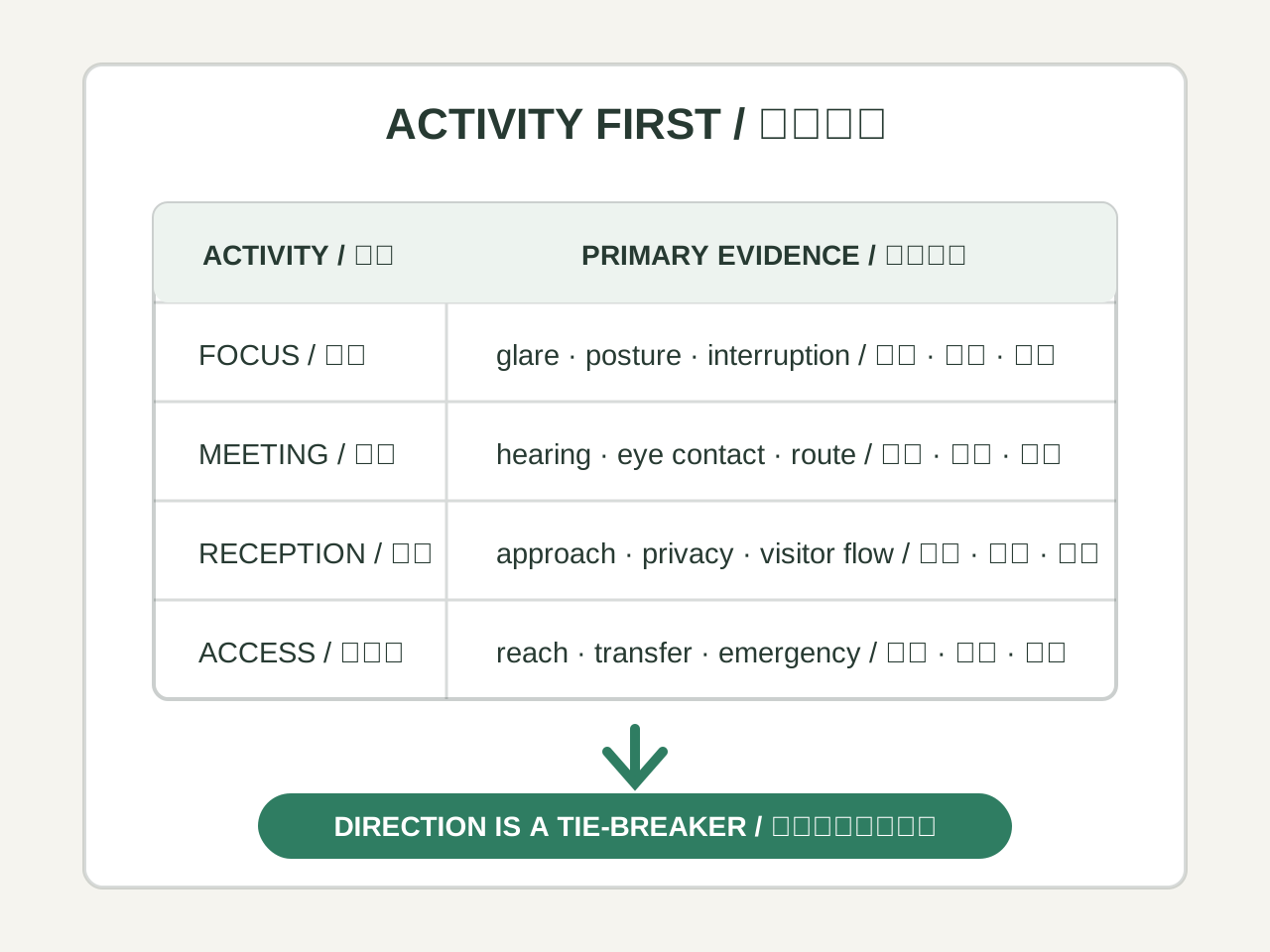
Contemporary office feng shui often groups a visible approach, backing, and a position outside the main traffic line under the English label 'command position'. That label is not one uniform classical rule and should not dominate the review. Job duties, glare, reach, posture, noise, accessibility, collaboration, privacy, and emergency circulation may support a different position.
Separate the popular position checklist into observable conditions
Check each preference independently instead of treating the label as one proven intervention:
- You face into the room rather than a nearby wall in the traditional arrangement. Some people prefer a plain wall for focus, so compare the view with the task instead of labelling either position harmful.
- The door is in view, ideally to your front-diagonal, not directly in line with you. This may help you notice approaches, but it does not prove lower tension or better output.
- The traditional backing preference places a solid surface behind the chair rather than a window or open walkway. Separately observe glare, approaches, ventilation, audibility, and chair clearance; a window is not automatically a defect.
- Some traditions value open space in front and use broader 'bright hall' (明堂) vocabulary for receiving space. Do not redefine that term as merely seeing a door. Measure the actual task area, circulation, and visual distraction.
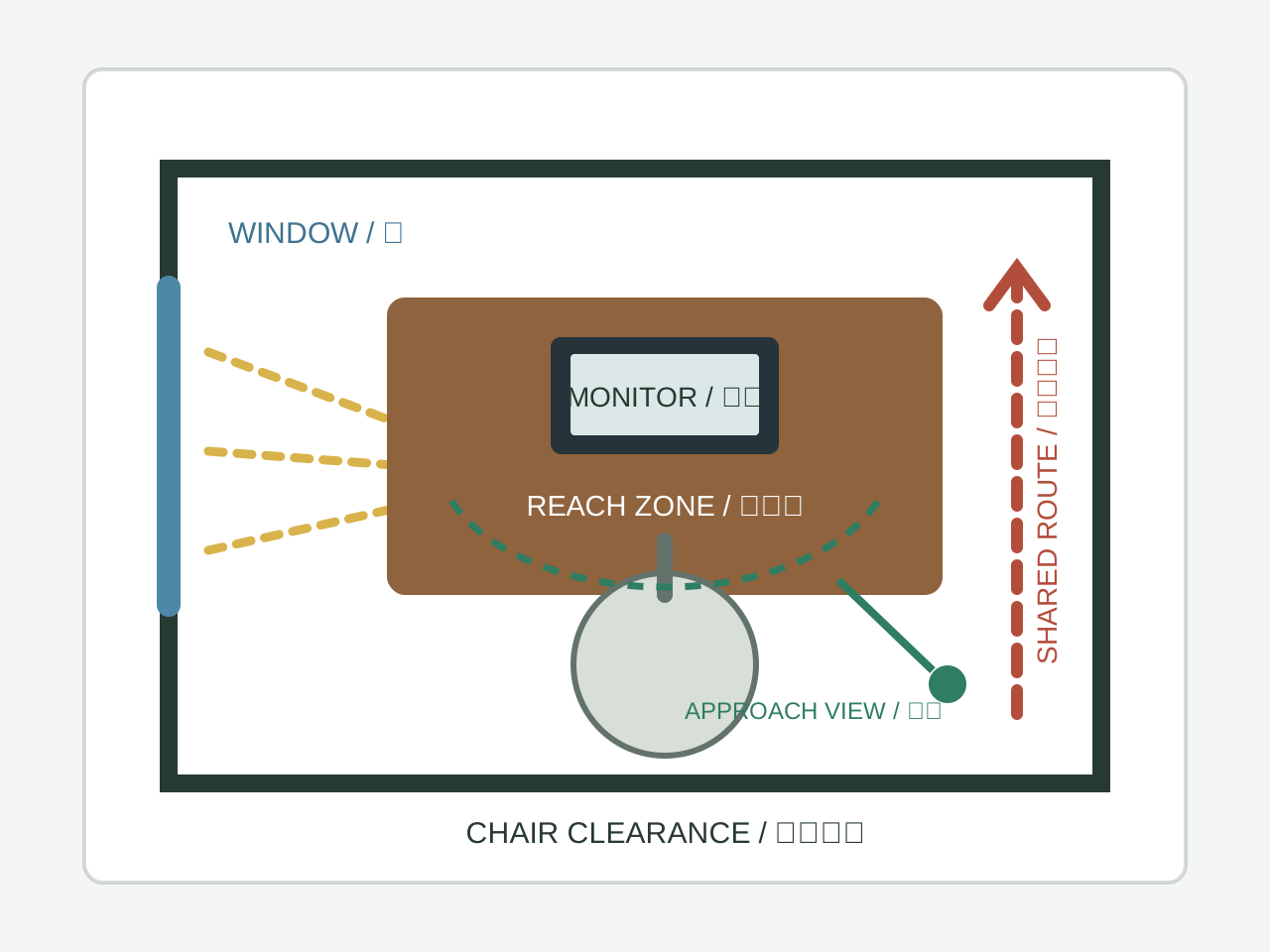
A worked example: an open-plan seat with your back to the aisle
The most common real problem is not a private office; it is a bench desk where you face a wall or a partition and your back is to the main walkway. You cannot rearrange the floor.
One reversible test is a small standing mirror positioned so the walkway is visible without exposing confidential screens or distracting colleagues. Another is a slight chair or monitor angle that preserves ergonomic alignment. Record unplanned approaches and discomfort for several workdays before and after; keep only the change supported by the record and workplace policy.
The half that is just ergonomics
Separate symbolic preference from physical setup. The items below can be inspected directly, but their effect still depends on the worker and task:
- Light: position screens and task lighting to control reflections and maintain readable contrast; more daylight is not automatically better when it creates glare.
- Clear surface: keep the area directly in front of the keyboard empty. Clutter in the working zone is the literal version of a blocked desk.
- Cables and tools: route cables out of sight and keep daily tools within reach. Friction you repeat fifty times a day is the real energy leak.
- Plants: optional decoration, not an efficiency treatment. Add one only when allergies, maintenance, light, pests, and shared-space rules make it suitable.
What the feng shui framing adds
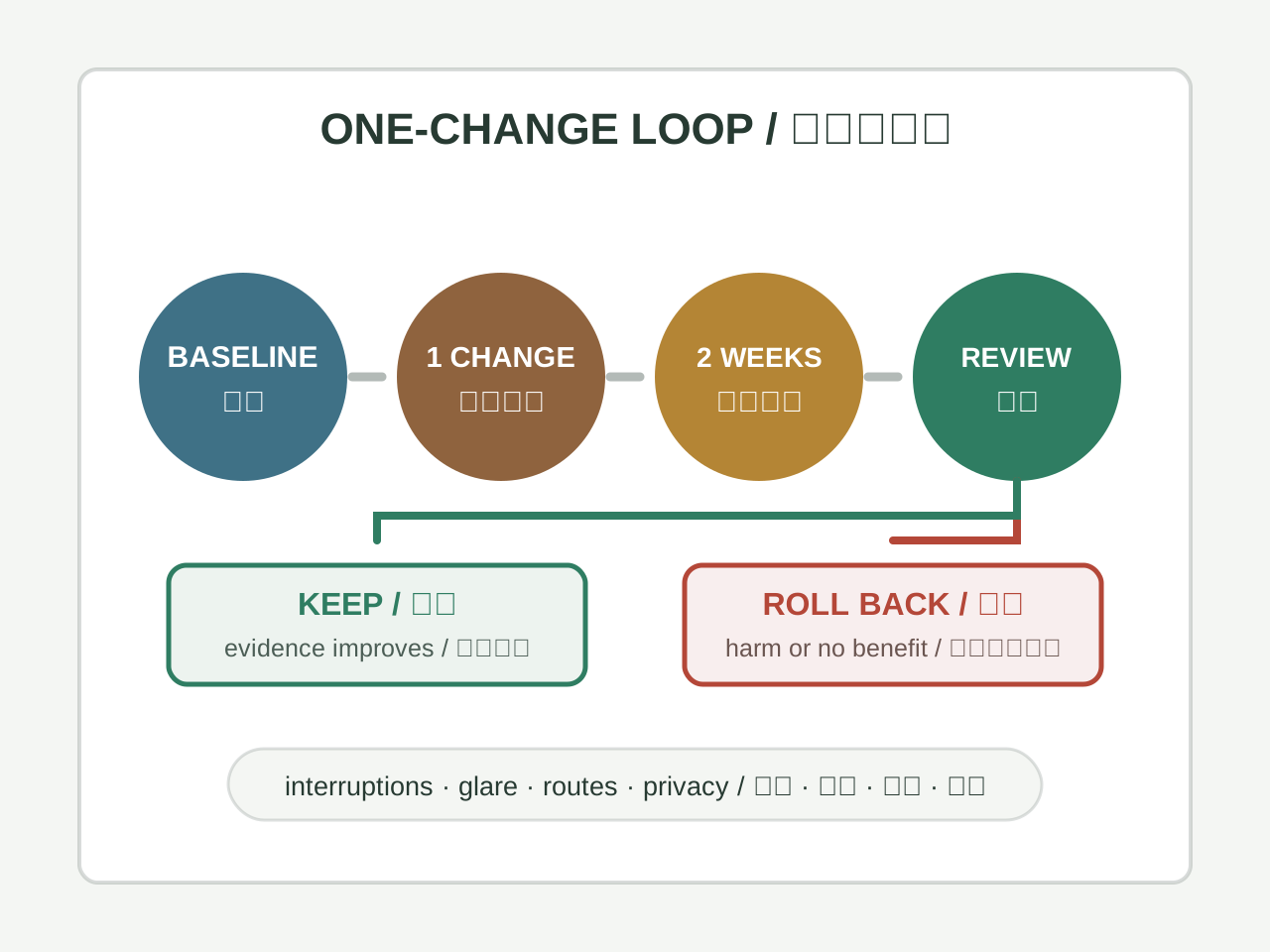
The feng shui frame can prompt one useful question: which part of this seat do I want to test? Define the issue, record a baseline, change one reversible variable, and review the same measure. A desk arrangement does not establish productivity, promotion, pay, or psychological benefit by itself; use workplace ergonomics and occupational-safety guidance for physical setup.
Measure the workstation before moving it
Map the door, primary walkway, windows, ceiling lights, power outlets, storage, meeting traffic, and confidential sightlines. Photograph the desk at eye level and note where glare appears at different times. Measure chair clearance, monitor distance, keyboard height, and the reach needed for frequently used items. A command position is only useful when it also supports posture, power access, privacy, and evacuation routes.
Compare two layouts on the same criteria: ability to see approaching people, interruption frequency, screen glare, cable safety, noise, storage access, and collaboration needs. If the desk cannot move, use a monitor angle, task light, cable tray, acoustic screen, or agreed quiet period to solve the specific problem instead of adding an unrelated symbolic object.
Run a two-week office experiment
Change one factor at a time and set a review date. For two weeks, count unplanned interruptions, periods of glare, time spent searching for materials, and any neck, shoulder, or wrist discomfort. Ask colleagues whether the change blocks communication or shared movement. Keep a change only when the evidence and the user experience both improve.
Escalate persistent pain, electrical hazards, unstable furniture, blocked fire routes, or accessibility barriers to the appropriate workplace or health professional. Desk direction cannot determine promotion, income, authority, or job security. Traditional preferences may be used as a tie-breaker only after the workstation meets practical requirements.
- Record a baseline before changing the desk.
- Test one reversible adjustment for two weeks.
- Keep, revise, or remove the change using observed results.
Document approval and handover
For a shared or employer-controlled office, record who approved the move, what equipment was changed, and when the arrangement will be reviewed. Include remote and hybrid users, cleaners, visitors, and colleagues with accessibility needs. This prevents a personal preference from becoming a hidden cost or obstacle for the rest of the team.
Keep before-and-after photographs, the equipment list, cable route, owner, review date, and rollback plan. Reassess the layout when the role, task, or team changes instead of treating one successful trial as a permanent rule.
Use the CCOHS office-ergonomics reference below for workstation fit, posture, reach, lighting, and comfort checks. It does not endorse command-position, backing, direction, or productivity claims. Record which CCOHS check applies beside the observed issue so a physical setup recommendation is not presented as proof of feng shui.
Workstation evidence table
Use the same measures before and after a desk change. Record at least three normal working days for the baseline, then test one reversible adjustment for two weeks. Note workload or staffing changes that could distort the comparison.
A desk move should have an owner, an approval record, a rollback plan, and a review date. Shared circulation, accessibility, privacy, cleaning, and emergency access are acceptance criteria, not optional extras.
| Measure | Baseline method | Keep or stop rule |
|---|---|---|
| Interruptions | Count unplanned approaches by time and direction | Keep when interruptions fall without blocking collaboration |
| Glare | Record screen glare in morning, midday, and afternoon | Stop if the change creates new visual strain |
| Reach and posture | Track repeated reaching and neck, shoulder, or wrist discomfort | Escalate persistent discomfort to an ergonomics or health professional |
| Privacy | Check screens, conversations, visitors, and video-call backgrounds | Stop when confidential information becomes more exposed |
| Shared routes | Observe colleagues, cleaners, visitors, and accessibility users | Rollback when movement or emergency access becomes harder |
A desk audit that starts with work, not symbolism
Before changing a desk, observe one ordinary work cycle from arrival to the first completed task. Note where the screen sits, what enters your field of view, where papers accumulate, whether a colleague or doorway interrupts you, and whether the chair allows a stable posture. This turns “good placement” into a set of conditions that can be checked rather than a promise attached to a direction.
A useful order is visibility, reach, lighting, noise, storage, and only then symbolic preference. Keep items used daily within easy reach; move occasional items out of the primary work zone; and test glare at the actual time of day when it is worst. If the desk is shared, document the compromise so the arrangement remains understandable to the next person.
- Check the specific issue described in “A desk audit that starts with work, not symbolism” before changing the arrangement or interpretation.
- Keep the action reversible and record what evidence would change the decision.
A small office case
Imagine a desk facing a busy corridor. The occupant describes it as unsettled, but the audit finds three concrete causes: people pass within the screen line, a printer sounds behind the chair, and incoming documents have no designated tray. Turning the desk slightly, moving the printer, and adding one labelled tray may solve more of the problem than buying a symbolic object.
The point is not that traditional language is useless. It can provide a vocabulary for comfort, orientation, and personal meaning. It should sit beside the observable audit. Record the original arrangement, change one variable at a time, and ask the worker what became easier or harder after a week.
- Check the specific issue described in “A small office case” before changing the arrangement or interpretation.
- Keep the action reversible and record what evidence would change the decision.
When a desk cannot be moved
Open-plan offices, hot desks, rental contracts, and accessibility needs often make an ideal arrangement impossible. In those cases, use portable and reversible measures: adjust monitor height, control glare, use headphones within workplace rules, place a small visual boundary, and keep emergency routes clear. Do not recommend blocking a door, covering ventilation, or placing heavy objects where they can fall.
A constraint is not a personal failure and it is not evidence that a reading was wrong. It is simply part of the design problem. A good recommendation explains the trade-off and offers a second-best option that respects safety, budget, colleagues, and the actual purpose of the room.
- Check the specific issue described in “When a desk cannot be moved” before changing the arrangement or interpretation.
- Keep the action reversible and record what evidence would change the decision.
A concrete reader question
A useful way to read Office Desk Feng Shui is to begin with a concrete question rather than a general promise. The page describes a practical guide to office desk feng shui, including command position, clutter, backing, lighting, and workplace comfort. A reader should write down what they want to understand, what information they already have, and what decision still belongs to them. If the question concerns a room, include the people who use it, the route through it, light, sound, maintenance, privacy, and safety. If it concerns a chart, date, symbol, name, dream, face, or palm, preserve the input, source, calendar or dictionary rule, and any uncertainty. This makes the topic specific enough to review instead of allowing a familiar term to stand in for an explanation.
Separate three layers in the notes: what the tradition means, what can be observed now, and what action is practical. A cultural association can be worth studying without being a verified prediction. The distinction is especially important when the topic sounds personal or consequential.
A worked comparison
Use one ordinary case related to Office Desk Feng Shui. Describe the situation in plain language before applying specialist vocabulary. Then compare two possible readings or actions in a table: input, method, expected implication, observable evidence, cost, risk, affected people, reversibility, and review date. If the topic involves a proposed arrangement, compare access, lighting, noise, comfort, cleaning, privacy, and shared agreement. If it involves a calculation or interpretation, compare the calendar, time boundary, source, school, dictionary, or weighting rule.
Do not hide a disagreement by averaging incompatible methods. State which conclusion changes under which assumption. Write one ordinary explanation beside the traditional one: workload, sleep, communication, budget, maintenance, camera angle, weather, or a simple input error may explain the same experience. A fair comparison makes room for curiosity and correction.
A low-risk next step
Choose one modest next step connected to Office Desk Feng Shui. Check a source, repeat a measurement, ask the person affected, observe the space at another time, compare two declared inputs, or keep a short record for a defined period. Change only one condition. Before acting, record the baseline and obtain consent if another person or shared space is involved. Avoid structural work, large purchases, or irreversible decisions until the practical issue is understood and the appropriate professional advice has been considered.
Review the result without treating sequence as proof of cause. Record what improved, what became harder, and what did not change. If a practical adjustment helps, acknowledge ordinary reasons that may have contributed. If it fails, undo or revise it rather than escalating automatically or blaming the reader. The value of a small test is that it can change the question.
Sources and limits
A reader should be able to see where the explanation comes from. Record the source, author or tradition, date accessed, terminology, and method used for Office Desk Feng Shui. Mark whether a statement is historical description, practitioner interpretation, direct observation, or practical advice. These categories should not be blended into a claim of scientific certainty. When two sources use the same word differently, preserve both definitions and explain which one this page follows.
The page is cultural and reflective material. It cannot diagnose illness, guarantee income, determine a person’s fixed character, prove relationship compatibility, replace legal or financial advice, or override safety and consent. Use proportionate language such as traditionally associated, one school interprets, or this input may suggest. Clear limits increase usefulness rather than weakening it.
A review record for future readers
Close a study of Office Desk Feng Shui with a record another reader could understand months later: original question, inputs, source, method, interpretation, ordinary explanation, action, cost, affected people, observed result, and next review date. Include evidence that did not fit the preferred explanation. If the original input was uncertain, do not rewrite it after the result is known. This preserves the difference between what was known at the beginning and what was learned later.
The reader remains free to disagree, seek another source, postpone action, or stop. If the issue involves health, safety, law, money, employment, structural work, or relationship coercion, use the relevant professional or shared process. The strongest conclusion is often a clearer question and a reversible next step, not a dramatic promise.
Disclaimer: This content is for informational and cultural reference purposes only. It does not constitute professional medical, legal, financial, or psychological advice. Readers should exercise their own judgment and consult qualified professionals for specific concerns.
Sources and review basis
Traditional references explain historical vocabulary and context. Official practical sources support only the observable safety, comfort, or environmental points noted in the article; they do not validate metaphysical claims.
Traditional reference
Huangdi Zhaijing (黄帝宅经)Wikisource digital text · Accessed 2026-07-14
Historical context for traditional residential orientation and spatial vocabulary. Modern recommendations are reviewed separately.
Practical source
CCOHS: Office ErgonomicsCanadian Centre for Occupational Health and Safety · Accessed 2026-07-14
Practical guidance for workstation setup, posture, reach, lighting, and office comfort.