Feng Shui Cures

Feng Shui Plants

This page explains Feng Shui Plants as a practical cultural reference, covering the core idea, common use cases, careful checks, and responsible limits so readers can compare traditional guidance with real conditions.

2025-09-13 · Updated 2026-06-07

B

Reviewed by BaZi Report Editorial Team

Our editorial team researches classical Chinese metaphysics and feng shui texts, fact-checks references against the original sources, and reviews every article before publication. We aim to keep traditional concepts clear and practical, and we stay transparent about what these readings can and cannot tell you.
Use this guide to understand Feng Shui Plants in context, compare several signals, and avoid treating any single traditional rule as a fixed promise.

Plants in feng shui: the honest version

Feng shui plants are one of the most searchable topics in the whole tradition, and also one of the most oversold. The core idea is simple: a healthy, well-placed plant brings living energy into a room. The problem is that the internet has turned this into a shopping list of magic plants that attract money, love, or career success.

The truth is more modest and more useful. A plant changes a room because it is alive, it softens hard edges, it improves air quality, and it gives you something to care for. The species matters less than the health of the plant. A thriving spider plant in the right light is better feng shui than a dying money tree in a dark corner.

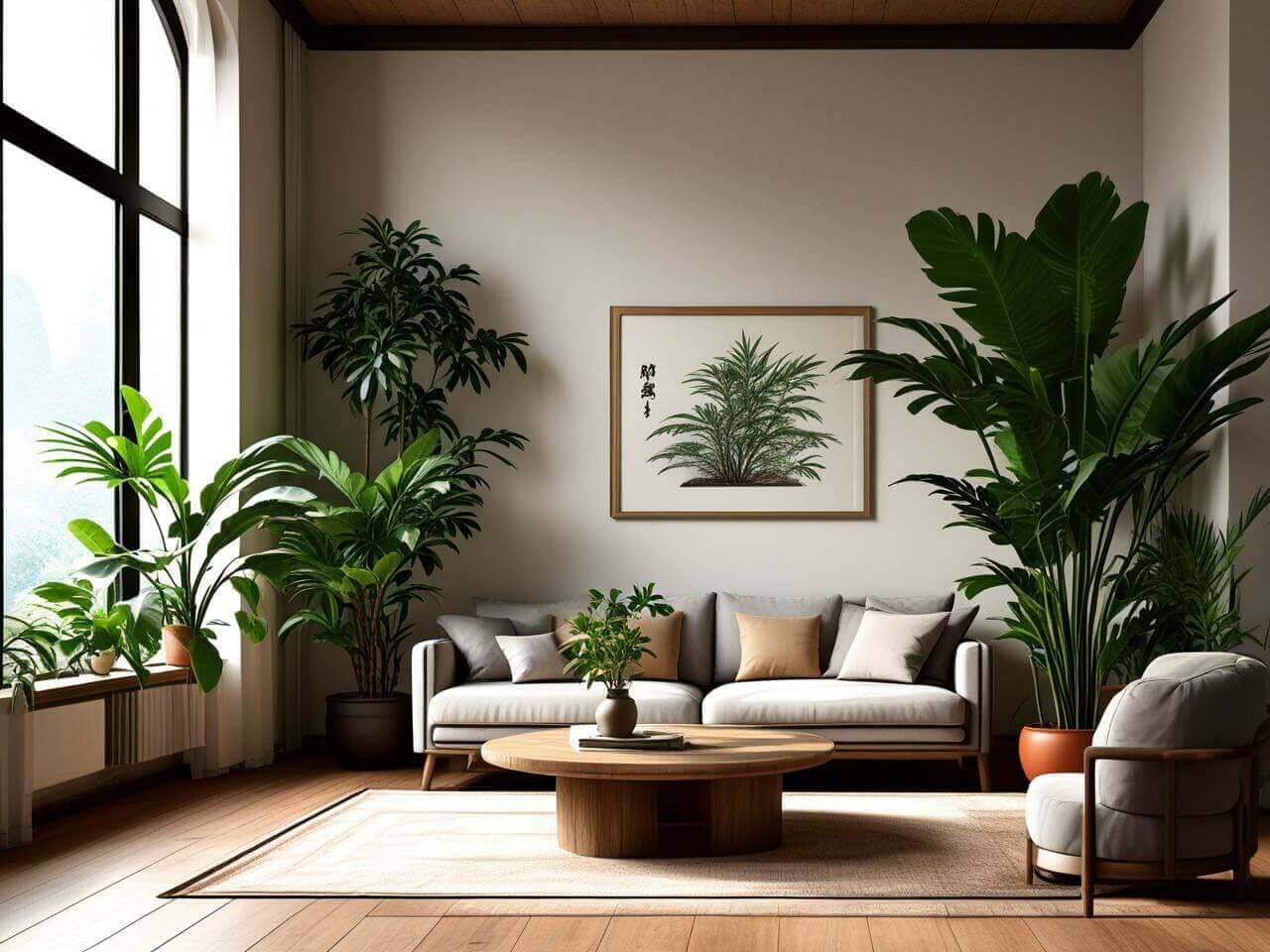
Indoor feng shui plants placed in a bright living space

The plants people actually ask about, and what they really do

Here are the most commonly recommended feng shui plants, stripped of the marketing:

PlantTraditional claimWhat it actually does
Money tree (Pachira aquatica)Attracts wealth and prosperityA hardy, attractive indoor tree that tolerates low light; the braided trunk is a conversation piece
Lucky bamboo (Dracaena sanderiana)Brings luck and harmonyEasy to grow in water; low maintenance; the number of stalks carries cultural symbolism, not magical properties
Jade plant (Crassula ovata)Attracts money; the coin-shaped leavesA succulent that needs bright light; its round leaves are visually pleasant and it is easy to propagate
Peace lily (Spathiphyllum)Purifies energy and airOne of the few plants proven to remove certain indoor air pollutants; also signals when it needs water by drooping
Snake plant (Sansevieria)Protective energy; absorbs negative chiThrives on neglect; releases oxygen at night, making it one of the few plants suitable for a bedroom
Orchid (Phalaenopsis)Enhances relationships and fertilityA beautiful flowering plant that requires specific care; its presence is decorative, not predictive

A worked example: the plant that keeps dying in the same spot

A common scenario: someone buys a feng shui plant for the wealth corner, places it in a dark hallway, and it is dead within a month. The internet says a dying plant in the wealth corner is a bad omen. The practical read: the plant died because it had no light.

The fix is to match the plant to the light, not the tradition. Move the plant to a spot with the right light level for its species. If the wealth corner is genuinely dark, use a high-quality silk plant or a plant that tolerates very low light, like a ZZ plant or a snake plant. The omen is not about your finances; it is about your plant care.

Where to put plants, and where not to

Placement is more important than species. A plant in the wrong spot is a maintenance problem, not a feng shui problem:

  • Good: living room corners, near windows, on a desk with indirect light, in an entryway with natural light. These are places where plants soften the room and thrive.
  • Bad: bedrooms with no natural light, dark bathrooms, directly behind a sofa where people brush against it, or in a walkway where it gets knocked over.
  • Avoid: sharp-leaved or spiky plants (cacti, yucca, holly) near seating areas or beds. The concern is not poison arrows; it is that you will brush against them and it will hurt.
  • Avoid: too many plants in one room. A room that feels like a greenhouse is visually overwhelming. Three to five healthy plants in a medium-sized living room is plenty.

Dead or dying plants: the one thing every school agrees on

If there is a single rule that crosses every feng shui school, it is this: a dead or dying plant is worse than no plant. A plant with brown leaves, drooping stems, or dry soil reads as neglect, and the visual signal it sends is the opposite of what you want. If a plant is struggling, either move it to better light, adjust the watering, or compost it. Do not keep a half-dead plant in the hope that it will recover in the same spot where it is currently dying.

The real value of a plant in a room

A healthy plant improves a room. It softens the space, adds a living element, and gives you a small daily ritual of care. That is a real benefit, and it is worth the effort. It does not attract wealth, predict good fortune, or ward off bad luck, and any plant seller who claims otherwise is marketing, not tradition. Buy plants you like, match them to the light you have, and keep them alive. That is the whole of practical feng shui plant advice.

Common misunderstandings

A common mistake is to turn Feng Shui Plants into a single yes-or-no rule. Traditional material is usually conditional: it depends on timing, layout, personal context, and the school of interpretation being used.

Another mistake is to ignore scale. A small symbolic adjustment cannot solve a structural problem, a relationship problem, or a professional matter by itself. It can only support clearer attention and better habits.

When different sources disagree, record the disagreement instead of forcing certainty. That makes the page more useful for comparison and keeps the interpretation honest.

How to continue learning

To continue learning, compare Feng Shui Plants with related articles, topic hubs, and course lessons on this site. Looking at several connected pages helps separate repeated principles from one-off claims.

Notice which ideas appear across different contexts: cleanliness, proportion, timing, safety, emotional clarity, and respect for real constraints. These repeated ideas are usually more reliable than dramatic claims.

Return to the page after observing the actual situation for a while. The best use of traditional knowledge is iterative: read, observe, adjust carefully, and review.

Disclaimer: This content is for informational and cultural reference purposes only. It does not constitute professional medical, legal, financial, or psychological advice. Readers should exercise their own judgment and consult qualified professionals for specific concerns.

Keep reading

Related articles

Content Note

This article is based on publicly available materials in traditional Chinese metaphysics and feng shui. It is intended as cultural reference and background knowledge only. Metaphysical predictions and feng shui suggestions are not substitutes for professional medical, legal, financial, or psychological advice. We encourage readers to apply their own judgment when interpreting the content. Learn more about our content guidelines